


What Makes a Wristband "Anti-Fraud"?
The term anti-fraud wristband refers to any wristband specifically engineered to prevent counterfeiting, unauthorized transfer between individuals, and reuse after an event ends. Standard paper or loose plastic wristbands offer minimal resistance to a determined fraudster — they can be photographed, replicated on a home printer, or carefully removed and passed to a second person. Anti-fraud wristbands close each of those loopholes through design, not just policy.
There are four core properties that define a genuinely secure event wristband:
- Non-transferability: The closure mechanism is designed so that once fastened, the wristband cannot be removed intact and re-applied to another person. Anti-transfer snap locks and toothed ratchet closures are the industry standard for this.
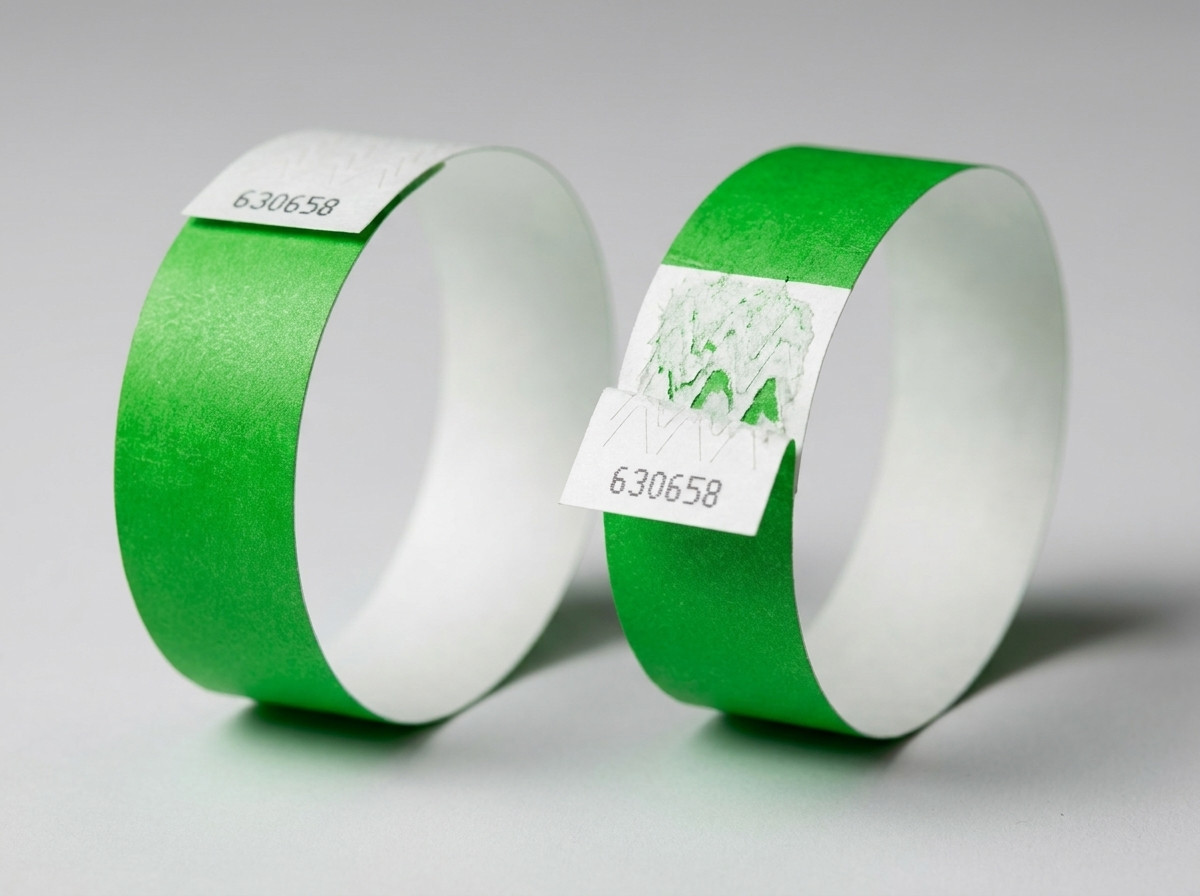
- Tamper evidence: Any attempt to cut, stretch, or otherwise manipulate the band leaves a visible mark — a torn pattern, a broken void seal, or a deformed closure. Staff can spot a compromised band in a glance.
- Duplication resistance: High-definition printing, sequential serial numbers, barcodes, or QR codes make each band unique and verifiable. A photocopied wristband cannot replicate a unique barcode that has already been scanned and logged.
- Material integrity: The substrate itself must resist stretching, tearing along seams, and ink transfer. Both Tyvek and vinyl (PVC) excel here for different event profiles.
Understanding these four pillars helps you choose the right specification for your specific event — and helps your security staff know exactly what to look for when checking wristbands at the gate.
Materials: Tyvek vs. Vinyl for Large Event Security
The two most widely used materials for anti-fraud wristbands are Tyvek and vinyl (PVC). Each has a distinct set of strengths, and the best choice depends on your event's duration, environment, and security requirements.
Tyvek Wristbands
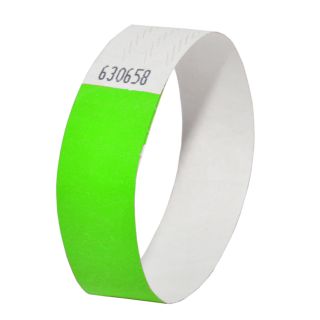
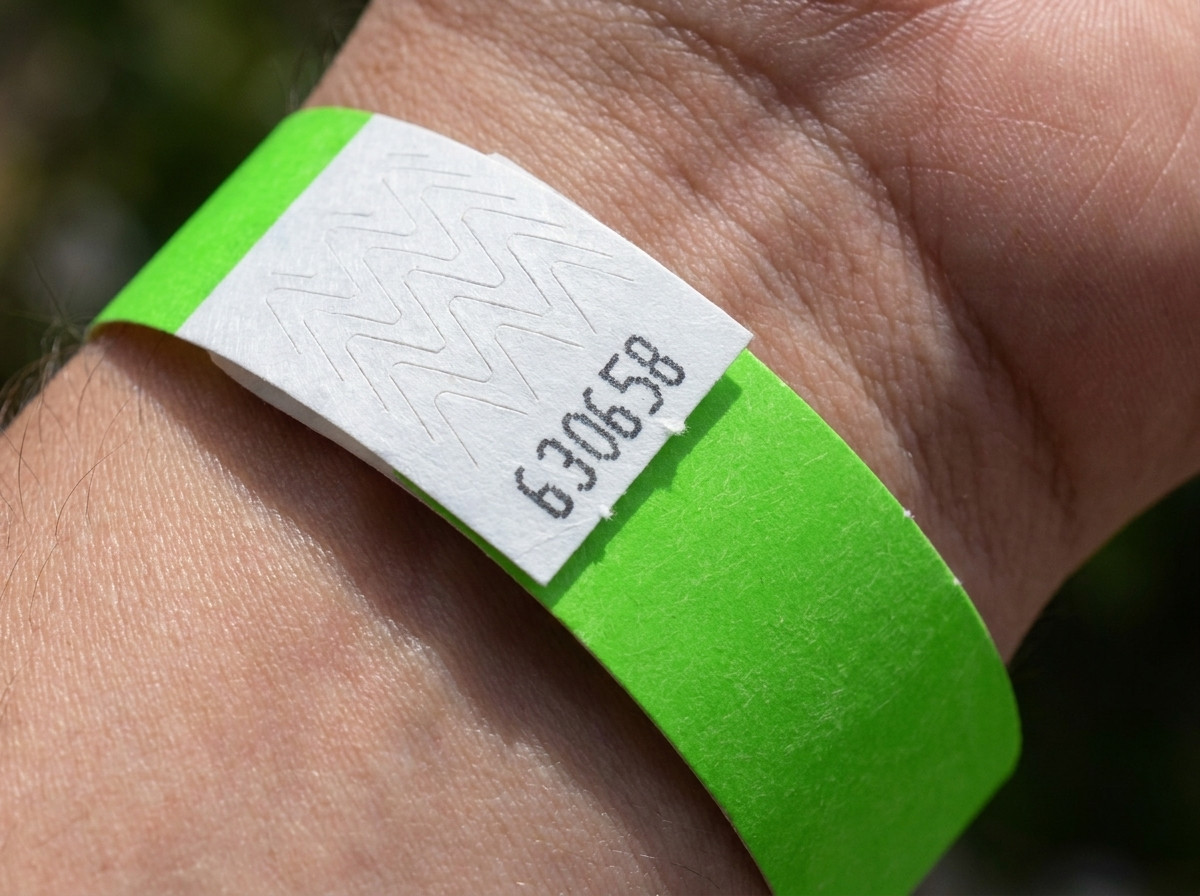
Tyvek is a high-density polyethylene fiber material that looks and feels like heavy paper but behaves more like a durable synthetic. It is lightweight, water-resistant, and — critically for fraud prevention — it tears rather than stretches. This means that any attempt to slip a Tyvek wristband off without cutting it will destroy the band visibly and irreversibly. When combined with an anti-transfer snap closure, a Tyvek wristband is extremely difficult to remove and re-apply without detection.
For large events that need to move thousands of attendees through gates quickly, Tyvek is the workhorse material. It is cost-effective at high volumes, prints sharply in full color for HD branding and security patterns, and can incorporate barcodes or QR codes for scanning at checkpoints. One of the most operationally significant advantages: Tyvek wristbands can be printed the same day they are ordered — making them the go-to solution when event timelines are tight or when another supplier has let an organizer down at the last moment.
Vinyl (PVC) Wristbands
Vinyl wristbands are manufactured from a flexible but tough PVC strip. They offer a premium look and feel, are fully waterproof, and are designed for multi-day durability. For events lasting two, three, or more days — think camping festivals, sports tournaments, or hotel resort passes — vinyl provides a more robust physical barrier. The material resists sweat, rain, and physical wear far better than any paper-based alternative.
From a security standpoint, vinyl wristbands carry the same anti-transfer closure options and support high-definition sequential numbering and barcode printing. Because each band is individually numbered, a security team using a handheld scanner can instantly verify authenticity or flag a duplicate at any point during a multi-day event.
The right choice in practice: for single-day festivals or high-throughput events where volume and speed dominate, Tyvek delivers the best balance of security and efficiency. For multi-day events where durability and a premium attendee experience matter alongside security, vinyl is the preferred specification.
Security Technologies Built Into Anti-Fraud Wristbands
The physical material is only part of the security equation. The identification and verification technologies printed or encoded onto the wristband determine how your team validates access at scale. For large events, three technologies are used most frequently:
Sequential Numbering
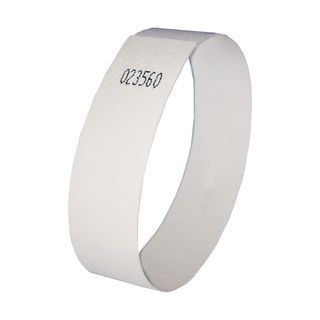
Every wristband in a print run carries a unique serial number, typically printed in a visible font and optionally encoded within a barcode. Sequential numbering means that the total number of valid wristbands in circulation is finite and known. Security staff can instantly recognize an out-of-range number as a fake, and any attempt to duplicate a legitimate number creates a detectable duplicate when scanned. For events issuing different tiers of access — general admission, VIP, backstage — separate number ranges or color schemes can be assigned per tier, giving gate staff an immediate visual cue without needing to scan every band.
Barcodes
A 1D barcode printed directly onto the wristband allows rapid scan-and-verify at entry points. When integrated with an event ticketing or access control system, each barcode can be marked as «used» the moment it is first scanned — making re-entry fraud with a photographed barcode impossible if your system enforces single-scan logic. Barcodes are readable with standard handheld scanners and even smartphone apps, keeping your hardware requirements low even for large deployments.
QR Codes
QR codes operate on the same principle as barcodes but carry significantly more data in a smaller footprint. A QR code can encode attendee name, ticket tier, seat or zone assignment, and a cryptographic token — all within a square that prints cleanly even on a narrow wristband. For premium events where per-attendee data matters (corporate conferences, hospitality, VIP experiences), QR codes allow your access control system to do real-time lookup, log re-entries, and generate post-event attendance analytics. The visual complexity of a QR code also makes it harder to reproduce convincingly by hand or on a basic home printer.
None of these technologies require a special substrate or exotic manufacturing process — they are printed at production time using high-definition inkjet or thermal-transfer systems. The key is ensuring your supplier prints with sufficient resolution and ink permanence that a barcode or QR code remains scannable after hours of wear, sweat, and movement. Manufacturing wristbands in-house rather than outsourcing print to a third party is the most reliable way to guarantee that specification is met consistently across every band in a large order.
Deploying Anti-Fraud Wristbands Across Large Events
Even the most technically sophisticated wristband is only as effective as the deployment process around it. At large events with tens of thousands of attendees, operational discipline at the wristbanding station matters as much as the product itself.
Staff Training
Every team member applying or checking wristbands should understand three things: what a valid band looks like, how the anti-transfer closure works (and why it must be fully clicked shut), and what signs indicate a tampered or fraudulent band. A laminated quick-reference card at each station eliminates ambiguity, especially when working with temporary or volunteer staff.
Color-Coded Access Tiers
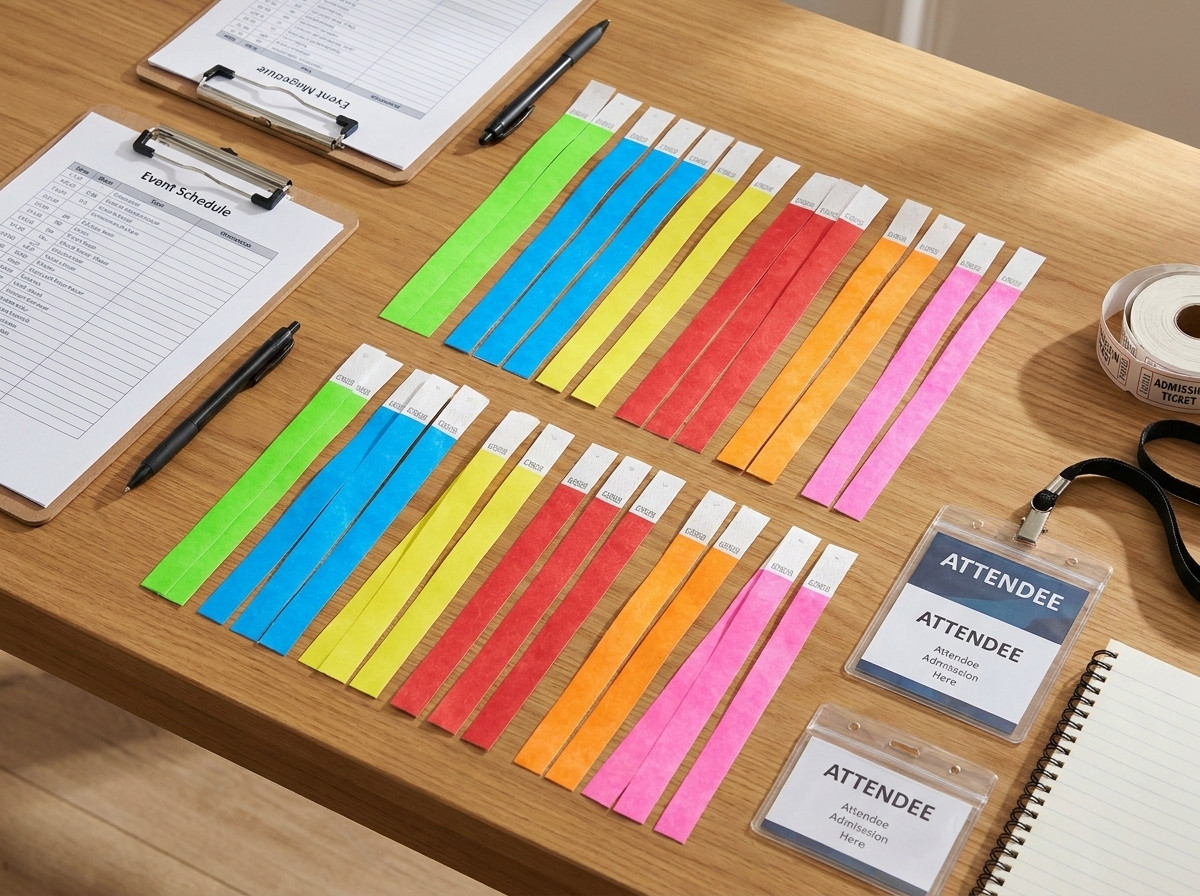
Assigning distinct colors to different access zones — general admission in blue, VIP in gold, staff in red — creates a first layer of visual verification that does not require a scanner. Staff patrolling the venue can identify zone breaches at a glance. Color coding is baked into the wristband design at print time, which is one reason working with a manufacturer that offers free graphic design is a genuine operational advantage: you can brief your requirements verbally and receive print-ready artwork ready for approval without any additional design overhead or back-and-forth delay.
Wristbanding Stations vs. Pre-Packed Kits
For events where attendees collect their wristband on the day, dedicated wristbanding stations with trained staff are the safest approach — staff apply the band and confirm the closure is fully engaged. For events where wristbands are sent in advance (hotel resort packages, corporate retreats, invitation-only conferences), pre-packed individual wristbands are dispatched with clear application instructions, and the sequential number is logged against the recipient before dispatch. Either model works; the choice depends on your event's check-in flow.
Handling Last-Minute Orders
One of the most overlooked risks in large event security is the procurement failure: an organizer discovers two days before the event that their wristband order was never placed, or that their supplier has shipped the wrong specification, or simply failed to deliver. These situations are more common than most people admit, and they create real security gaps — events that resort to improvised solutions (paper wristbands, sticky labels, wrist stamps) lose virtually all fraud resistance.
Same-day production of Tyvek wristbands — with no rush surcharge applied — combined with express shipping via DHL Express and FedEx Express means that even a critical last-minute gap can be closed within 24–48 hours. Events that have been rescued from genuine wristband crises include major outdoor festivals, charity sports days, and multi-venue corporate conferences where a third-party supplier fell silent days before the event. Speed of production and reliable express delivery are, in those moments, as important a security feature as the anti-transfer closure itself.
Pros, Cons, and Recommendations by Event Type
Not every large event has the same security profile. Below is a practical breakdown of how to match wristband specification to event type.
Single-Day Music Festivals and Outdoor Events
Recommended: Tyvek with anti-transfer snap closure, full-color HD print, sequential numbering, optional barcode.
Pros: Fast throughput at gates, cost-effective at high volume (10,000+ units), water-resistant for outdoor conditions, immediate visual tamper evidence if torn. Cons: Not suitable for multi-day wear without replacement; less premium feel than vinyl for high-end experiences.
Multi-Day Camping Festivals and Sports Tournaments
Recommended: Vinyl (PVC) with toothed anti-transfer closure, HD print, sequential numbering, barcode or QR code.
Pros: Durable for 3–7 days of continuous wear; waterproof against rain, showers, and swimming; premium appearance enhances perceived value of the event. Cons: Higher unit cost than Tyvek; production lead time is slightly longer for complex custom designs.
Corporate Conferences and Trade Shows
Recommended: Vinyl with QR code per attendee, printed name or delegate number, access tier color coding.
Pros: QR codes enable per-session access tracking and post-event analytics; professional finish suits a business environment; difficult to transfer without detection. Cons: Requires integration with an access control or badge management system to realize the full benefit of per-attendee scanning.
Hotel Resorts and All-Inclusive Venues
Recommended: Vinyl, waterproof, with sequential number and strong anti-transfer closure; custom branding for brand visibility.
Pros: Guests wear them continuously for the duration of their stay; waterproof material survives pool and beach environments; tamper-evident closure prevents wristband sharing between guests and non-guests. Cons: Comfort over multi-day wear should be considered in the vinyl thickness specification.
Charity Runs, Sports Days, and Community Events
Recommended: Tyvek, single-color or two-color print with event branding, sequential numbering, anti-transfer closure.
Pros: Budget-friendly; fast to produce (same-day for Tyvek orders); easy to deploy with volunteer staff. Cons: Not designed for multi-day use; minimal scanning infrastructure needed, so the numbering serves primarily as a visual verification tool rather than a scannable system.
Designing Your Anti-Fraud Wristband: What to Include
A wristband that is visually distinctive is harder to counterfeit convincingly. When designing your wristband, consider incorporating the following elements:
- Event name and date: A band that explicitly references a specific date is worthless to a fraudster attempting to recycle it at a future event.
- Custom artwork: Full-color HD printing with original artwork — logos, custom patterns, gradients — dramatically raises the difficulty of copying compared to a plain-colored band with simple text.
- Security pattern or microtext: Fine-detail background patterns printed at high resolution are virtually impossible to reproduce on a consumer printer, even if the overall design is photographed.
- Barcode or QR code: Unique per-band identifiers for scanning at entry points.
- Sequential serial number: Visible to the naked eye for manual verification.
- Access tier color: Clear visual differentiation between zones or access levels.
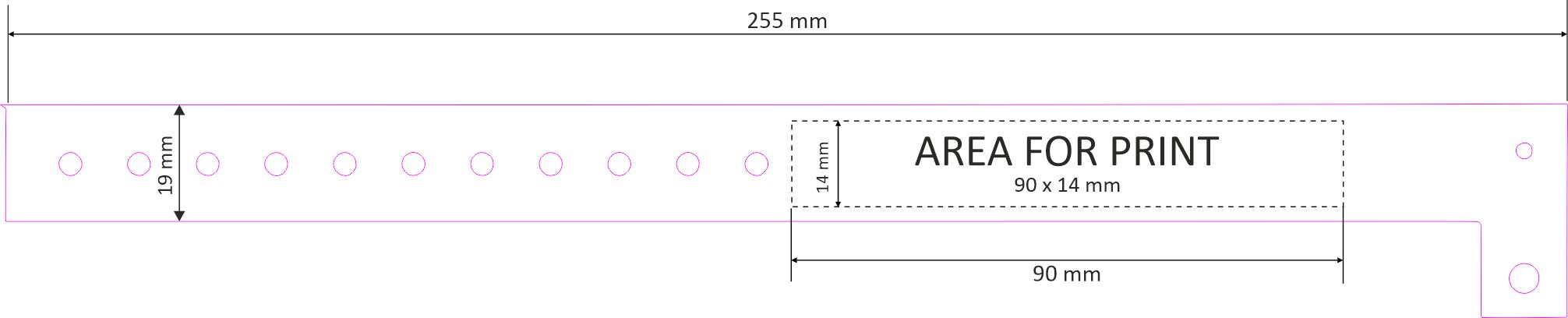
The design process does not need to be a bottleneck. Providing the event name, date, color preferences, logo, and access tier requirements is enough to produce a complete, print-ready design — professional artwork is created at no additional cost, meaning even organizers with no internal design resource can field a fully branded, security-grade wristband without any additional overhead. For urgent events, design turnaround is aligned with production timelines, so the design process never becomes the reason a same-day order cannot ship.