


What Exactly Is Tyvek? A Material Science Primer
Tyvek is a brand name for a family of synthetic materials manufactured by spinning ultra-fine, high-density polyethylene (HDPE) fibres and then bonding them together with heat and pressure — no chemical binders are used. The result is a sheet material that sits in an unusual middle ground: it looks and feels somewhat like paper, yet it behaves more like a thin plastic film when exposed to liquids or physical stress.
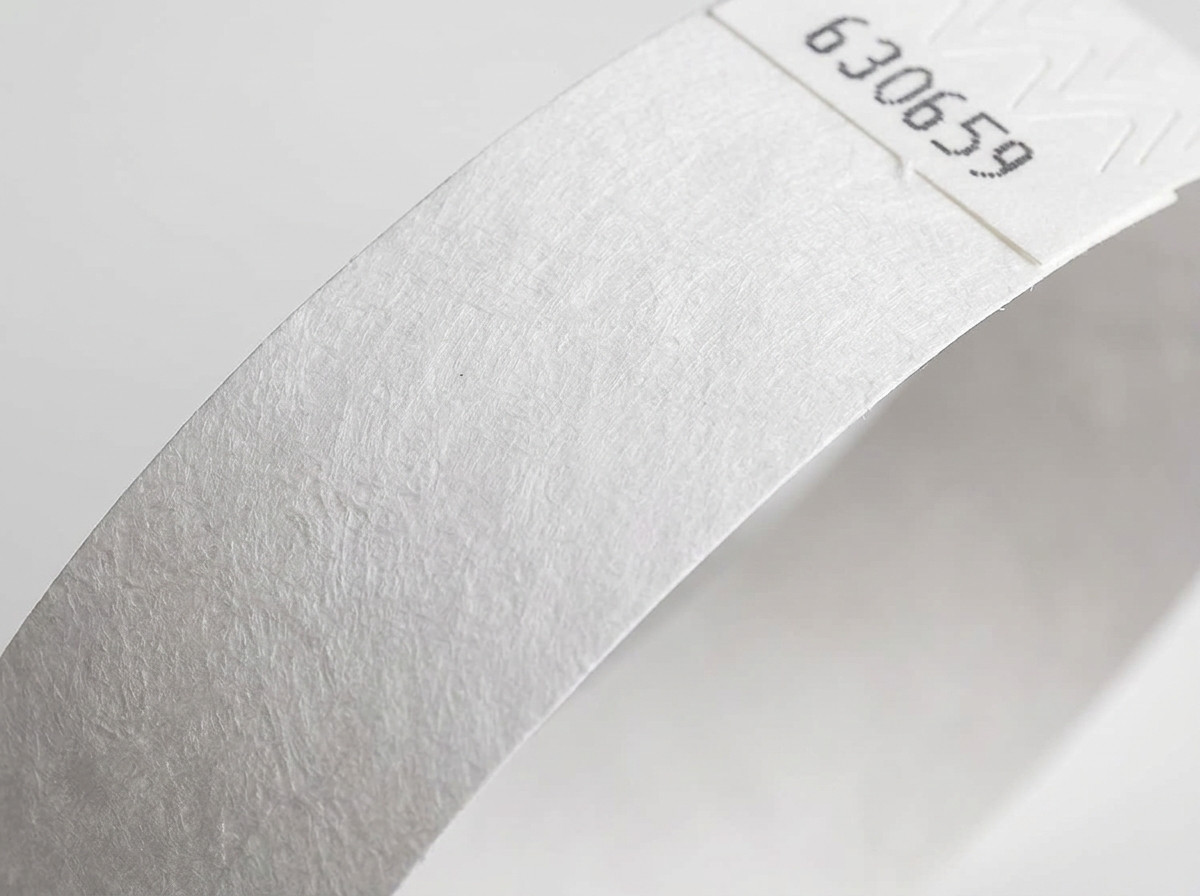
The fibres in Tyvek are so fine — typically less than one micron in diameter — that the finished sheet is both opaque and surprisingly dense. Because the fibres are bonded by heat rather than glue, the material has no weak adhesive layer to delaminate. This gives Tyvek a characteristic toughness: you can crumple it, wet it, and pull at it, and it will resist tearing far longer than ordinary paper.
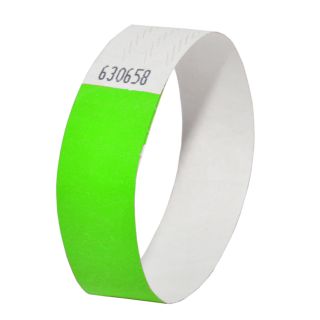
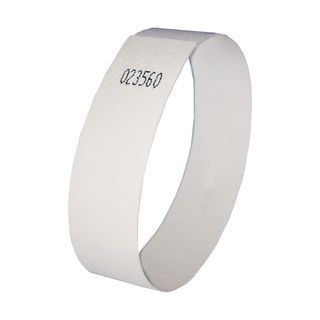
For wristband manufacturing, these properties translate directly into practical advantages. The surface is smooth enough to hold sharp, high-resolution printed graphics — logos, text, sequential numbering, barcodes, and QR codes all reproduce with excellent clarity. At the same time, the material is flexible enough to wrap comfortably around any wrist size without cracking or leaving sharp edges.
Key Physical Properties of Tyvek Wristbands
Understanding the physical characteristics of Tyvek helps you predict exactly how your wristbands will perform in the field. Below is a detailed breakdown of the most relevant properties for event organizers and procurement managers.
Waterproof and Sweat-Resistant
Tyvek is inherently waterproof. The polyethylene fibres are hydrophobic, meaning water cannot penetrate the sheet — it simply beads off the surface. This makes Tyvek wristbands ideal for outdoor events in unpredictable weather, beach parties, waterparks, and any venue where attendees are likely to sweat heavily. The print — applied using thermal transfer or direct thermal printing — is also water-stable once applied, so barcodes and text remain legible even after hours of exposure to moisture.
Tear Resistance
While Tyvek cannot be torn as easily as paper, it is important to understand the nature of its resistance. It resists accidental tearing — the kind that happens when a wristband snags on something — very well. However, once a deliberate, focused cut begins, it can be propagated. This is actually intentional in wristband design: the material should be removable by scissors or by deliberate action, but not by casual pulling. The tamper-evident anti-transfer adhesive closure reinforces security far more than the material itself.
Lightweight and Thin
Tyvek wristbands are exceptionally thin and light. A standard wristband weighs only a fraction of a gram, making it virtually unnoticeable on the wrist. This is a significant comfort advantage for multi-day events where guests wear the band continuously for 24, 48, or even 72 hours.
Anti-Transfer Adhesive Closure
The security of a Tyvek wristband depends not just on the material but on its closure mechanism. Tyvek wristbands use a specially formulated pressure-sensitive adhesive that bonds aggressively to the Tyvek surface itself. When someone attempts to remove the wristband without cutting it, the adhesive bond fails visibly — the closure tears apart rather than peeling cleanly, leaving clear evidence of tampering. This prevents the classic fraud of removing a wristband and handing it to a non-ticketed person.
Printability
The surface of Tyvek accepts printing with high fidelity. For wristbands, this means your logo, event name, date, and any variable data (sequential numbers, barcodes, QR codes) print sharply and without bleeding. Full-colour graphics reproduce well, with vibrant contrast on the standard white base. Custom background colours and multi-colour designs are achievable, making Tyvek wristbands a genuine branding vehicle, not just a functional tag.
Typical Use Cases: When Tyvek Wristbands Are the Right Choice
Tyvek wristbands are the most widely used disposable identification medium in the events industry. Their combination of low cost, strong printability, tamper evidence, and waterproof performance makes them suitable for an extremely broad range of applications.
Festivals and Concerts
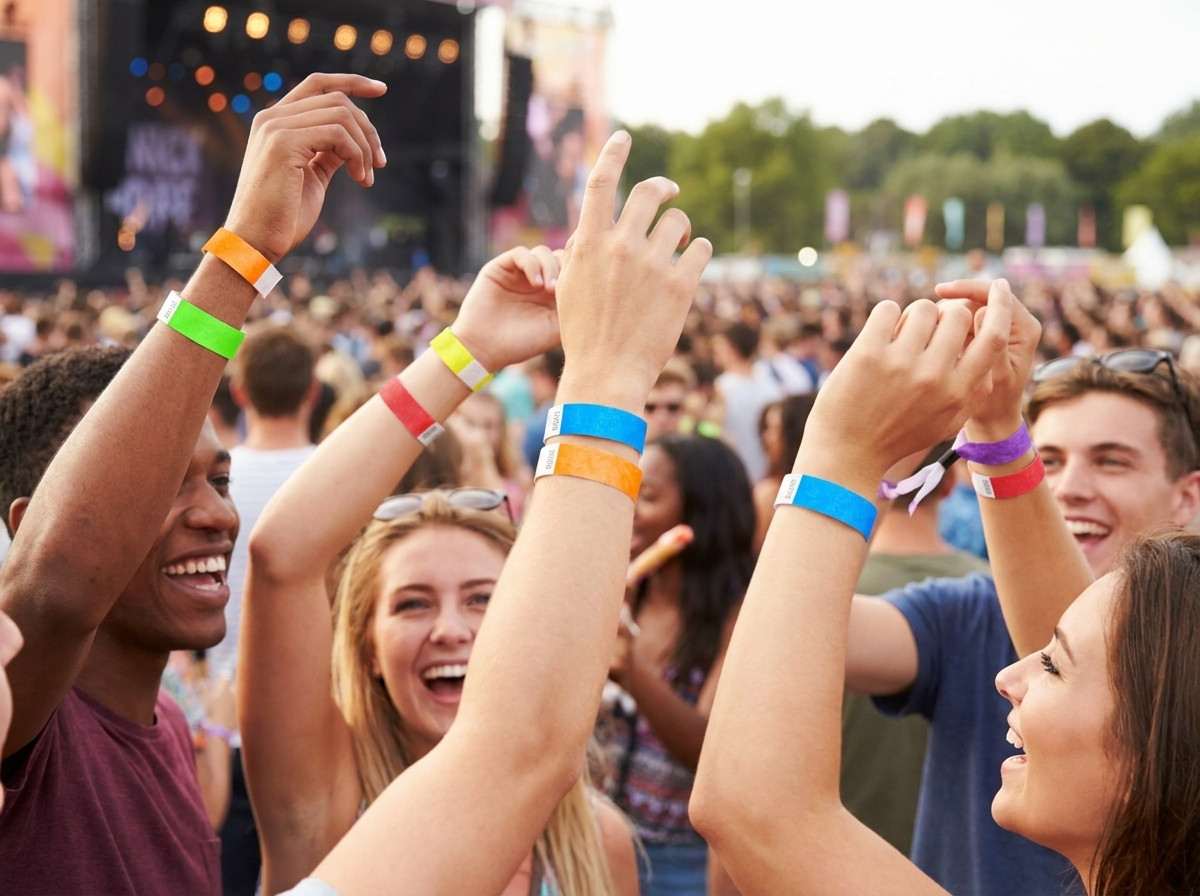
Single-day or weekend music festivals represent the classic Tyvek use case. High volumes of attendees need to be admitted quickly, access-level differentiation (general admission, VIP, backstage) is often required, and the physical environment — sun, rain, mud, and close-packed crowds — demands a wristband that stays intact and legible all day. Tyvek delivers on all counts. Using a distinct colour per access tier is a reliable, low-tech security layer that staff can verify visually from a distance.
Sports Events and Races
Marathon and triathlon organizers use Tyvek wristbands to track entrants at check-in, manage wave starts, and control access to restricted zones such as athlete areas and timing corrals. The waterproof surface survives sweat and outdoor weather throughout a race duration that can stretch to many hours.
Conferences and Trade Shows
Multi-track conferences often need to restrict certain sessions or catering areas to specific attendee categories (speakers, sponsors, general delegates). Tyvek wristbands — combined with sequential numbering or barcodes for check-in scanning — offer a cost-effective solution that does not require the infrastructure investment of reusable credentials.
Waterparks and Aquatic Venues
Because Tyvek is fully waterproof and its print does not smear when wet, waterparks rely on it heavily for daily admission control. Guests can wear wristbands through slides, wave pools, and changing rooms without any degradation in print quality or structural integrity.
Nightclubs and Bars
Venues that need age-verification wristbands at entry — confirming that a guest is of legal drinking age — use Tyvek because a wristband applied at the door cannot be quietly removed and given to a minor. The anti-transfer closure is specifically valuable here, and the low per-unit cost allows high-volume venues to change colours nightly for an added layer of date-specific control.
Hospital and Healthcare Settings
Patient identification in healthcare environments — particularly for day procedures, outpatient clinics, or event medical teams — benefits from Tyvek's combination of skin-friendly comfort, waterproof surface (patients are bathed or showered), and legible printed text. Sequential numbering supports precise patient tracking.
Last-Minute and Emergency Ordering
One situation where Tyvek specifically outperforms alternatives is urgent, short-notice ordering. Because Tyvek wristbands can be produced the same day they are ordered — with no rush surcharge — they are the natural choice when an event organizer realises at the last moment that wristbands were never ordered, or when another supplier has failed to deliver. Fast dispatch via DHL Express and FedEx Express means that even customers in distant cities can receive wristbands the following morning. This kind of supply-chain rescue is not a rare edge case; it is a routine service that saves events from last-minute chaos.
Tyvek vs. Vinyl (PVC) Wristbands: Choosing the Right Material
The two primary wristband materials in professional event use are Tyvek and vinyl (PVC). Understanding the differences helps you choose correctly for each project.
Durability
Vinyl wristbands are significantly more durable than Tyvek. A vinyl band can withstand days or even weeks of continuous wear, repeated water immersion, and more aggressive physical handling without showing degradation. Tyvek is designed for single-use, typically one to three days of wear. For short events, Tyvek's durability is more than sufficient; for festivals spanning an entire week or for permanent identification purposes, vinyl is the appropriate choice.
Cost
Tyvek wristbands cost considerably less per unit than vinyl. For large-scale events where thousands or tens of thousands of wristbands are required, and where the band will only be worn once, this cost difference is decisive. Vinyl's higher per-unit cost is justified by its longevity and reuse potential.
Comfort
Both materials are comfortable for most wearers. Tyvek is marginally softer and thinner, which some people prefer for extended wear. Vinyl has slightly more structural rigidity and a slicker feel. Neither material causes skin irritation under normal conditions, though individuals with extremely sensitive skin may have preferences.
Print Quality
Both Tyvek and vinyl support high-definition print with vivid colour reproduction and sharp variable data (barcodes, QR codes, sequential numbers). The difference in print quality between the two materials is minimal for practical event use.
Security
Both materials use anti-transfer adhesive closures that resist removal without cutting. Vinyl's greater structural strength means it is harder to damage accidentally, which can be relevant for extended-wear situations where the risk of a wristband being accidentally torn increases over time.
Environmental Considerations
Tyvek is made from HDPE and is technically recyclable in specialist facilities, though not via standard kerbside recycling. Vinyl (PVC) has a more complex environmental profile. For events where sustainability is a priority, organisers should consider their disposal plan for either material and communicate clearly with waste management partners. Neither material dissolves or decomposes quickly in standard conditions.
Designing and Ordering Tyvek Wristbands: A Practical Guide
Getting from «I need wristbands» to «wristbands in hand» is simpler than most first-time buyers expect, particularly if you work with a manufacturer who handles the full production chain in-house.
Defining Your Requirements
Start by answering four questions: How many wristbands do you need? How many access tiers do you need to distinguish? Do you need variable data (sequential numbering, barcodes, QR codes)? And when exactly do you need them in hand? The answers to these questions determine your colour choices, your print specification, and your order timeline.
Artwork and Graphic Design
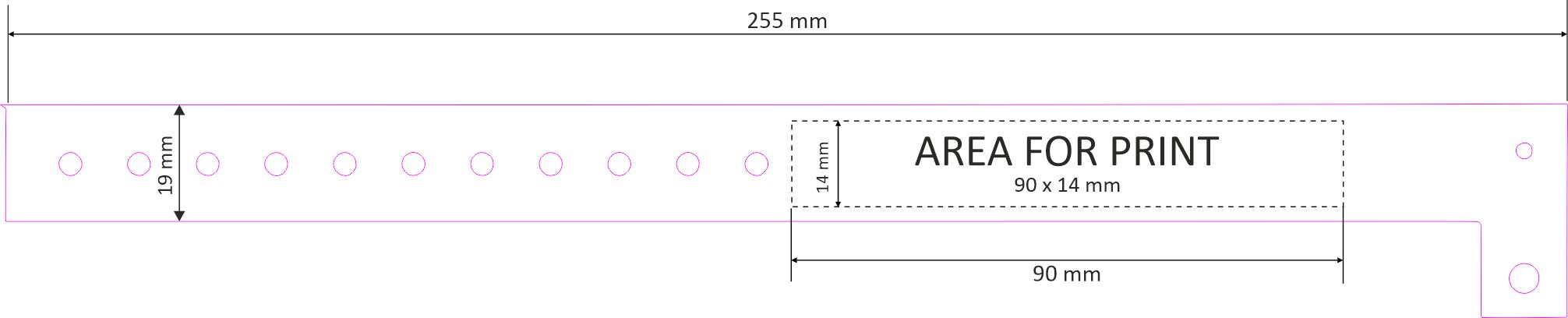
A wristband is a small canvas — typically 245 mm × 25 mm — but it carries significant branding and information weight. The design needs to balance your logo, event name, date, and any access-tier labelling with enough white space that staff can read the band quickly at a glance. If you do not have a print-ready design file, free graphic design is available: you simply describe what you want, and the artwork is created professionally at no extra cost. This removes a significant barrier for smaller events and organisations without an in-house design resource.
Variable Data and Personalisation
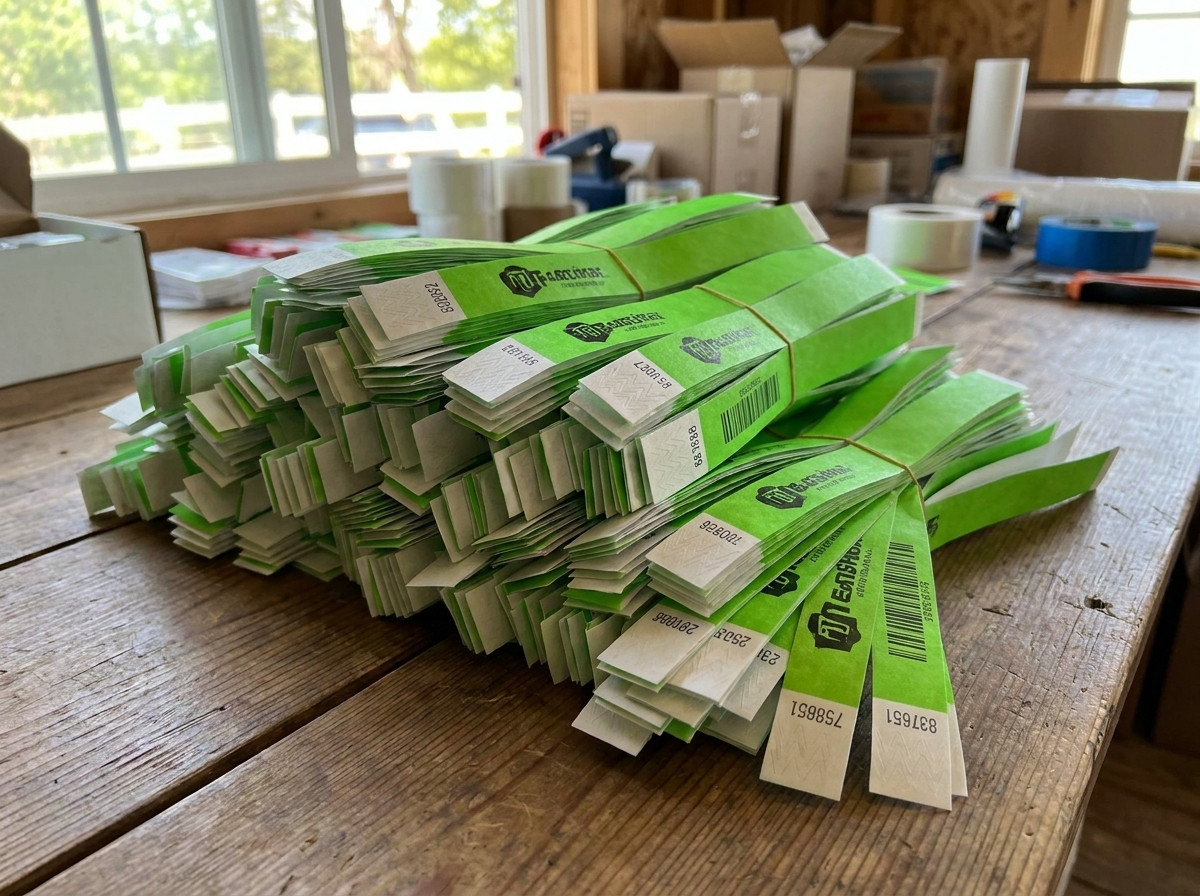
Sequential numbering, barcodes, and QR codes can all be printed directly onto Tyvek wristbands during the production run. Sequential numbering is useful for tracking and auditing; barcodes and QR codes enable digital check-in scanning with event management software. Specify your variable data requirements clearly when ordering — the production system handles the range and format automatically.
Colour Strategy for Access Tiers
Colour is your first line of visual security. Assigning a distinct wristband colour to each access tier (general admission, VIP, crew, media, catering) allows any member of your team to verify access eligibility at a glance, without needing to scan or read the wristband in detail. The more tiers you have, the more important it is to choose colours with strong visual contrast from one another — avoid pairing colours like navy and black, or light green and yellow, which can look similar under dim venue lighting.
Lead Times and Express Production
Standard production lead times vary depending on volume and specification, but Tyvek wristbands have a significant advantage over other materials: they can be printed the same day they are ordered. This same-day production capability — with no rush surcharge applied — is not a marketing promise; it is an operational reality made possible by manufacturing Tyvek wristbands in-house. There is no outsourcing delay, no third-party print queue to wait for. Once the order and artwork are confirmed, production starts immediately.
For delivery, DHL Express and FedEx Express are used for fast dispatch, which typically means next-business-day or two-day delivery across most of Europe and beyond. When an event is tomorrow and wristbands are not yet ordered, same-day production combined with express overnight delivery has repeatedly made the difference between an event proceeding smoothly and an admission crisis.
Quantities and Pricing Logic
Tyvek wristbands are priced on a per-unit basis that decreases as volume increases — a standard characteristic of print manufacturing. For events requiring only a few hundred wristbands, the per-unit cost is higher than for orders of ten thousand or more, but even small-quantity orders remain affordable because Tyvek itself is an economical material. Always order a modest surplus — typically 5 to 10 percent above your anticipated attendance — to cover spoilage during application, last-minute additions to the guest list, and replacement of damaged or accidentally removed bands at the gate.
Pros and Cons of Tyvek Wristbands: An Honest Assessment
No material is perfect for every application. Here is a balanced evaluation of where Tyvek excels and where it falls short.
Advantages
- Waterproof performance — survives rain, sweat, and splashing without structural or print degradation.
- Low cost per unit — the most economical wristband material for high-volume, single-use applications.
- Tamper-evident closure — anti-transfer adhesive prevents removal and re-application.
- Excellent print quality — sharp reproduction of logos, text, barcodes, QR codes, and sequential numbers.
- Same-day production — faster from order to dispatch than any other wristband type.
- Comfortable for extended short-term wear — thin and light enough to be forgotten on the wrist within minutes of application.
- Colour variety — available in a wide range of base colours to support multi-tier access systems.
Limitations
- Single-use only — not designed to be removed and reapplied; once removed, tamper evidence is triggered.
- Limited long-term durability — adequate for one to three days of wear; not appropriate for week-long events or permanent ID.
- Not as rigid as vinyl — for environments with very high physical demands, vinyl offers greater structural robustness.
- Specialist recycling required — HDPE is recyclable but not via standard household streams; disposal planning is needed at scale.