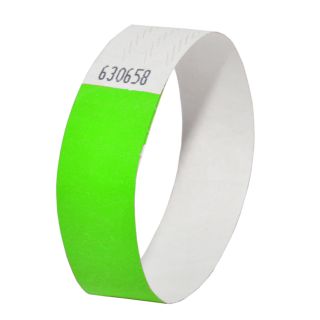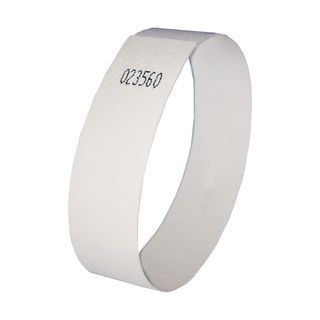



What Are Rigid Plastic Wristbands?
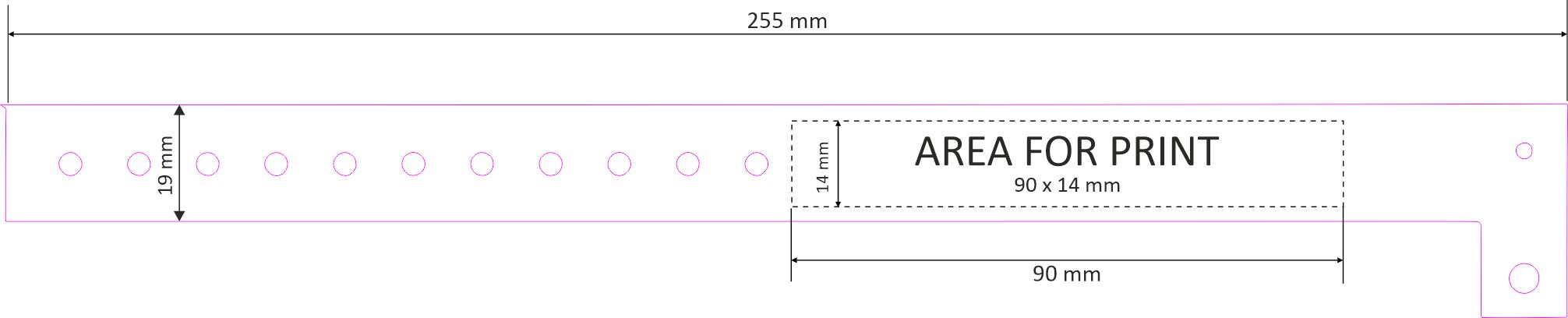
Rigid plastic wristbands are narrow bands — typically between 19 mm and 25 mm wide — moulded or extruded from hard-grade PVC or similar rigid polymer compounds. The defining characteristic is stiffness: unlike flexible vinyl or lightweight Tyvek bands, these wristbands hold their shape under load, resist bending, and snap closed with an audible click that confirms a secure fit.
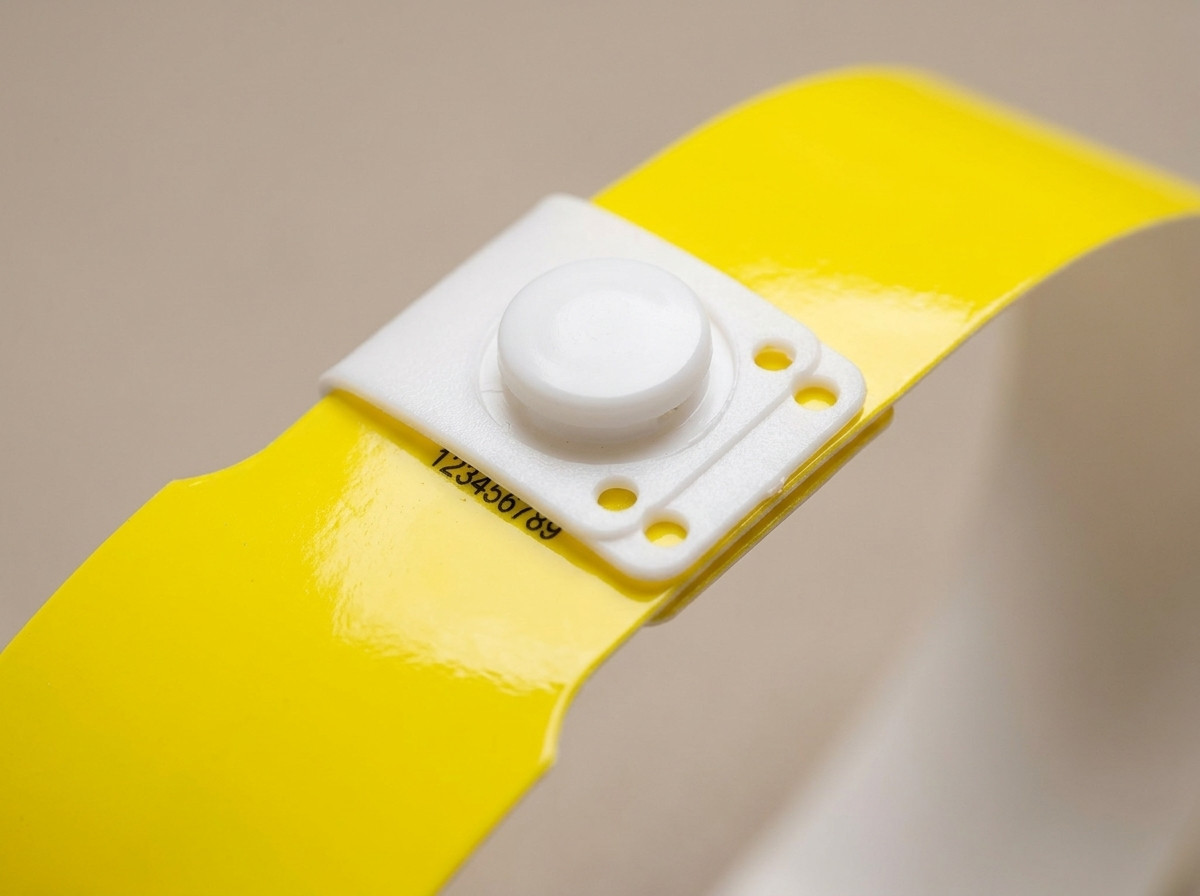
The locking mechanism is central to the product's security value. Most rigid plastic bands feature a one-way snap lock or a slide-and-lock tab integrated directly into the band itself. Once engaged, the closure cannot be released without cutting the band or breaking the tab, which leaves obvious physical evidence of tampering. This characteristic is not a minor convenience — in hospital environments it is a critical safety feature that prevents patients from exchanging or removing identification without staff knowledge.
The band's surface is smooth and slightly glossy, providing an excellent substrate for high-definition printing. Information is either pre-printed during manufacture using thermal transfer or direct thermal processes, or printed on-site using a dedicated desktop wristband printer. Sequential numbering, barcodes, and QR codes can all be reproduced with sufficient resolution to be read reliably by scanners, which is essential for any automated check-in or patient-matching workflow.
Standard sizing accommodates adults comfortably, while narrower and shorter versions are produced for paediatric and neonatal use — an area where the combination of secure fit, clear printing, and tamper evidence is literally life-saving. Colour coding is a widely used complement to printed data: different colours denote different wards, risk categories, access levels, or dietary requirements, allowing staff to gather information at a glance before even reading the printed text.
Key Material Properties and Construction
Understanding the material science behind rigid plastic wristbands helps buyers make informed decisions and communicate requirements accurately to their supplier.
Hardness and Structural Integrity
The polymer used in rigid plastic wristbands is formulated to maintain shape across a wide temperature range — typically from near-freezing to well above body temperature. This means the band will not soften and loosen on a sun-warmed wrist during an outdoor resort stay, nor will it become brittle in a refrigerated clinical environment. The structural rigidity also means the band resists being rolled, folded, or flattened to slip over the hand, which is a common attempt to remove snap-closure wristbands without breaking them.
Water and Chemical Resistance
Rigid plastic is essentially impervious to water. Patients can shower, swim, or be subjected to clinical cleaning agents without the band degrading, delaminating, or losing print legibility. At a waterpark or resort with pool facilities, this durability is equally valuable: a wristband that survives daily immersion for a week-long stay does the job that a paper or Tyvek band simply cannot.
Print Surface Quality
The smooth exterior of a rigid plastic band accepts thermal and direct thermal printing with high fidelity. Barcode print quality — measured by the Print Quality Grade standard — is typically high enough to pass automated scanner verification even after days of wear. For patient safety applications, the legibility of critical fields such as name, date of birth, medical record number, and allergen alerts must remain intact throughout the patient's stay, and rigid plastic construction delivers this reliability.
Locking Mechanisms in Detail
There are two dominant closure types in the market:
- Snap-lock tabs: A series of interlocking teeth or a single ratchet point that engages when the band tip is pushed through the clasp. Each tooth locks independently, allowing a snug fit across a range of wrist circumferences without pre-sizing.
- Slide locks: The band end threads through a housing and is secured by a locking pin. This style is common in adult identification applications and provides a very secure, low-profile finish.
Both mechanisms produce a band that, once applied, cannot be removed intact. Staff applying wristbands should be trained to verify that the lock is fully engaged and that the fit is comfortable — neither so tight as to restrict circulation nor so loose as to allow the hand to be pulled through.
Primary Use Cases for Rigid Plastic Wristbands
Rigid plastic wristbands have earned their place across several distinct sectors. In each case the same underlying properties — durability, tamper evidence, and print fidelity — are expressed differently depending on the operational context.
Medical and Healthcare Identification
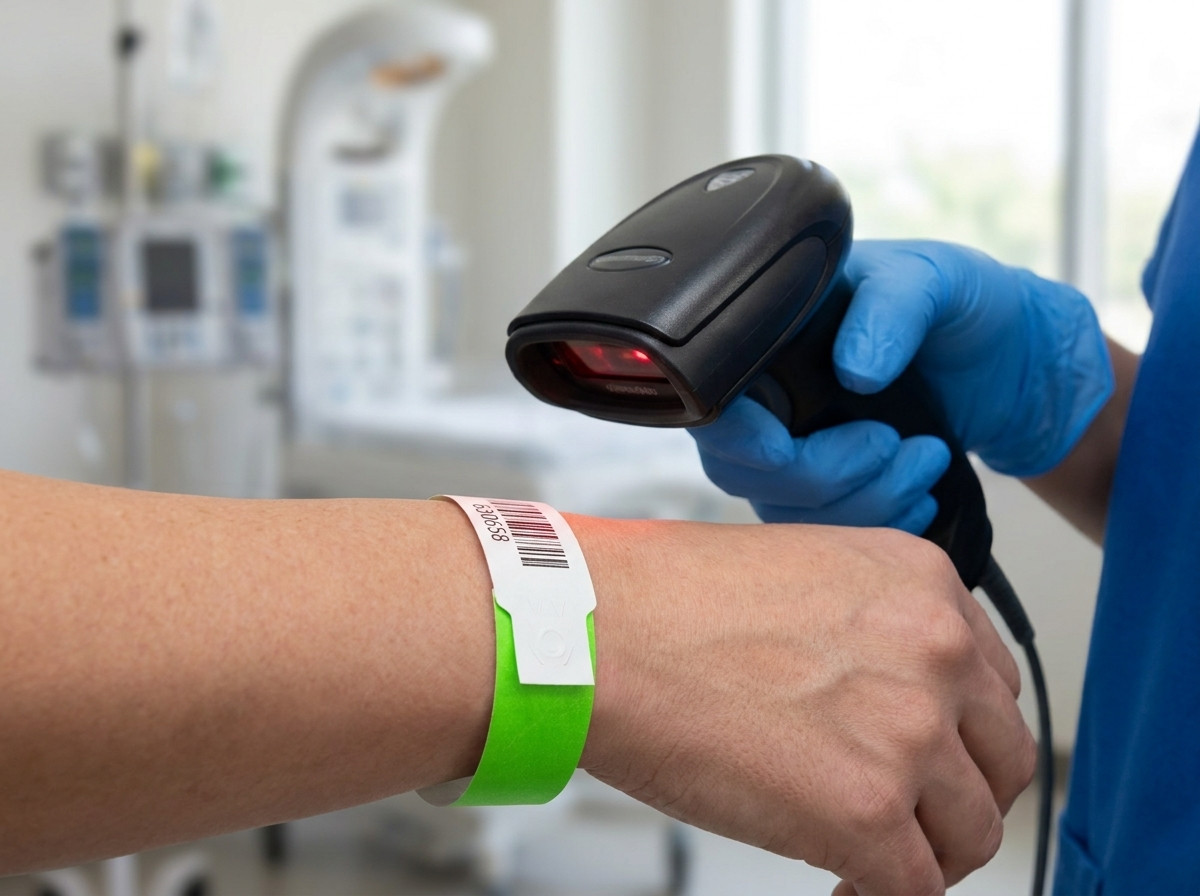
Patient identification is the most safety-critical wristband application in existence. Misidentification in a clinical setting can lead to wrong-patient events — incorrect medication, wrong-site surgery, or transfusion of incompatible blood products. Rigid plastic wristbands are designed specifically to address this risk. The one-way lock prevents unauthorised removal, the durable surface keeps information readable throughout what may be a lengthy hospital stay, and the compatibility with barcodes or QR codes enables positive patient identification (PPID) — the practice of scanning a patient's wristband before performing any procedure to confirm identity electronically.
Colour-coding protocols are deeply embedded in hospital practice. For example, red bands commonly signal allergy status, yellow indicates fall risk, and purple denotes a Do Not Resuscitate order — though specific colour meanings vary by institution and country. The availability of rigid plastic wristbands in a wide palette of colours allows hospitals to implement their chosen protocol precisely.
Neonatal and paediatric variants deserve specific mention. Newborns receive matching wristbands that link them to their mothers immediately after delivery — a fundamental infant security measure. These bands must fit tiny wrists securely, remain comfortable against delicate skin, and hold up to routine handling, bathing, and monitoring procedures. Specialised small-format rigid plastic bands meet all three requirements.
Hospitality: Resorts, Waterparks, and All-Inclusive Hotels
In a resort or waterpark environment, the wristband is effectively the guest's key, ticket, and proof of entitlement — all in one. Guests wear the band continuously for the duration of their stay, which may span several days of pool use, beach activities, spa visits, and buffet access. Rigid plastic construction is the only practical choice for this kind of sustained, wet-environment wear.
Colour coding enables front-of-house staff and security to confirm access rights at a glance: a gold band might indicate all-inclusive dining while a blue band confirms pool access only. Adding a barcode or QR code links the physical band to a reservation in a property management system, enabling cashless purchases, time-stamped access logs, and occupancy tracking. The result is a guest experience tool as much as an identification product.
Multi-Day Events and Access Control
For events that span multiple days — festivals that include camping, conference packages, or VIP passes for a weekend activation — rigid plastic wristbands provide a level of security that single-use paper or Tyvek bands cannot match. The tamper-evident closure means a wristband cannot change hands without staff noticing, reducing fraudulent access attempts.
When combined with sequential numbering or QR codes, each band becomes unique and traceable. Scanning at entry points creates a live attendance record, allows re-entry management, and provides real-time occupancy data for venue capacity compliance. For event organisers who need both security and data, the rigid plastic wristband is a highly capable tool.
Corporate and Campus Identification
Visitor management in corporate campuses, manufacturing plants, or secure government facilities benefits from the same tamper-evident properties. A contractor or visitor wearing a rigid plastic wristband issued at reception cannot easily pass it to someone who has not been vetted. Combined with a printed photo, name, and access code, the wristband functions as a short-term credential that is immediately visible to any employee and verifiable by security staff.
Pros and Cons of Rigid Plastic Wristbands
A clear-eyed assessment of where rigid plastic wristbands excel — and where they may not be the best fit — saves buyers time and budget.
Advantages
- Exceptional durability: Designed for multi-day or multi-week continuous wear with no degradation in structure or print quality.
- Genuine tamper evidence: One-way locking ensures the band cannot be removed without visible destruction, a critical feature for both clinical safety and access control.
- Water and chemical resistance: Fully waterproof; survives pools, showers, and clinical cleaning agents without issue.
- High print fidelity: Compatible with barcode and QR code printing at the resolution required for automated scanning, enabling digital integration with patient management and event ticketing systems.
- Colour-coding capability: Available across a broad colour palette, enabling rapid visual triage in medical and hospitality contexts.
- Comfortable over time: The smooth hard surface does not absorb moisture or odour, making it more comfortable than fabric alternatives during extended wear in humid conditions.
Limitations
- Higher unit cost: Rigid plastic bands are more expensive per unit than Tyvek or paper wristbands, which may be a deciding factor for very large single-day events where durability is not required.
- Requires dedicated printing equipment for on-site customisation: Unlike Tyvek wristbands, which can be printed on a standard printer or pre-printed in bulk, on-site personalisation of rigid plastic bands requires a thermal wristband printer.
- Not suitable for very short-term use: For a single-entry event lasting a few hours, the additional cost and production complexity are unnecessary — a Tyvek or vinyl band is the more proportionate choice.
- Sizing considerations: The band must be applied at the correct size setting; an incorrectly fitted band is either uncomfortable or insecure. Staff training on correct application is important.
- Environmental footprint: Hard plastic has a higher environmental cost than biodegradable paper alternatives. For organisations with sustainability commitments, this is a factor to weigh against durability requirements.
How to Choose the Right Rigid Plastic Wristband for Your Application
Matching the wristband specification to the application requirements avoids both over-engineering (and overspending) and under-speccing (which leads to failures in the field). The following framework covers the most important variables.
1. Duration of Wear
If your event, stay, or identification requirement lasts more than 24 hours, rigid plastic is worth the premium. For single-day applications, Tyvek — which can be printed the same day it is ordered without any rush surcharge — is typically the more economical and practical choice. For anything spanning multiple days, especially with exposure to water, rigid plastic earns its cost through reliability.
2. Security Level Required
Ask yourself: what happens if a wristband is transferred to an unauthorised person? In a clinical setting, the answer involves patient harm or at minimum a serious governance failure. In a resort, it means revenue loss and potential overbooking of services. At a festival, it means fraudulent access. The stronger the consequence, the more important tamper-evident closure becomes — which is where rigid plastic justifies itself over simpler alternatives.
3. Data Integration
If you need to scan wristbands — for patient check-in, cashless payments, re-entry management, or occupancy tracking — your chosen band must deliver reliable barcode or QR code readability. Specify this requirement explicitly when ordering, and confirm that print quality is validated against scanner performance.
4. Colour Coding and Visual Hierarchy
Map out your colour-coding scheme before ordering. Do you need to differentiate between five patient risk categories? Three resort access levels? VIP, general, and crew at an event? Having a clear scheme allows you to order the right quantities in the right colours and brief your team on what each colour means before the event or season begins.
5. Volume and Lead Time
Rigid plastic wristbands are typically produced in batches. For pre-printed custom designs, plan for a lead time that accommodates production and delivery. If you are in a time-critical situation — an event in 48 hours, or a supplier who has let you down — it is worth contacting a manufacturer directly. Suppliers who own their production process and work with fast express couriers like DHL Express and FedEx Express are able to respond to genuine emergencies where other options have fallen through.
6. Complement with Other Wristband Types
Many large-scale operations use multiple wristband types simultaneously. A hospital might issue rigid plastic bands to in-patients and Tyvek day bands to outpatient clinic visitors. A resort might use rigid plastic for week-long guests and vinyl for day-pass holders. Understanding the full range of available materials — and their relative strengths — allows for a smarter, more cost-effective overall identification strategy.