


What Is Sequential Numbering on Wristbands?
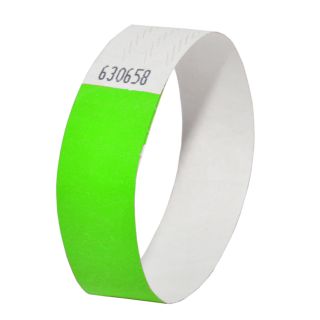
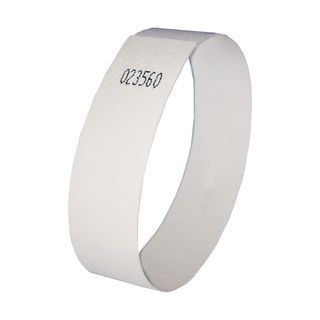
Sequential numbering is the practice of assigning each wristband in a production run a unique, consecutive identifier — printed directly onto the band during manufacturing. Unlike a generic batch code shared by all units, a sequential number is exclusive to a single band. The sequence can begin at any starting point you specify (e.g., 00001, 10000, or any custom start) and increments by one for every wristband produced.
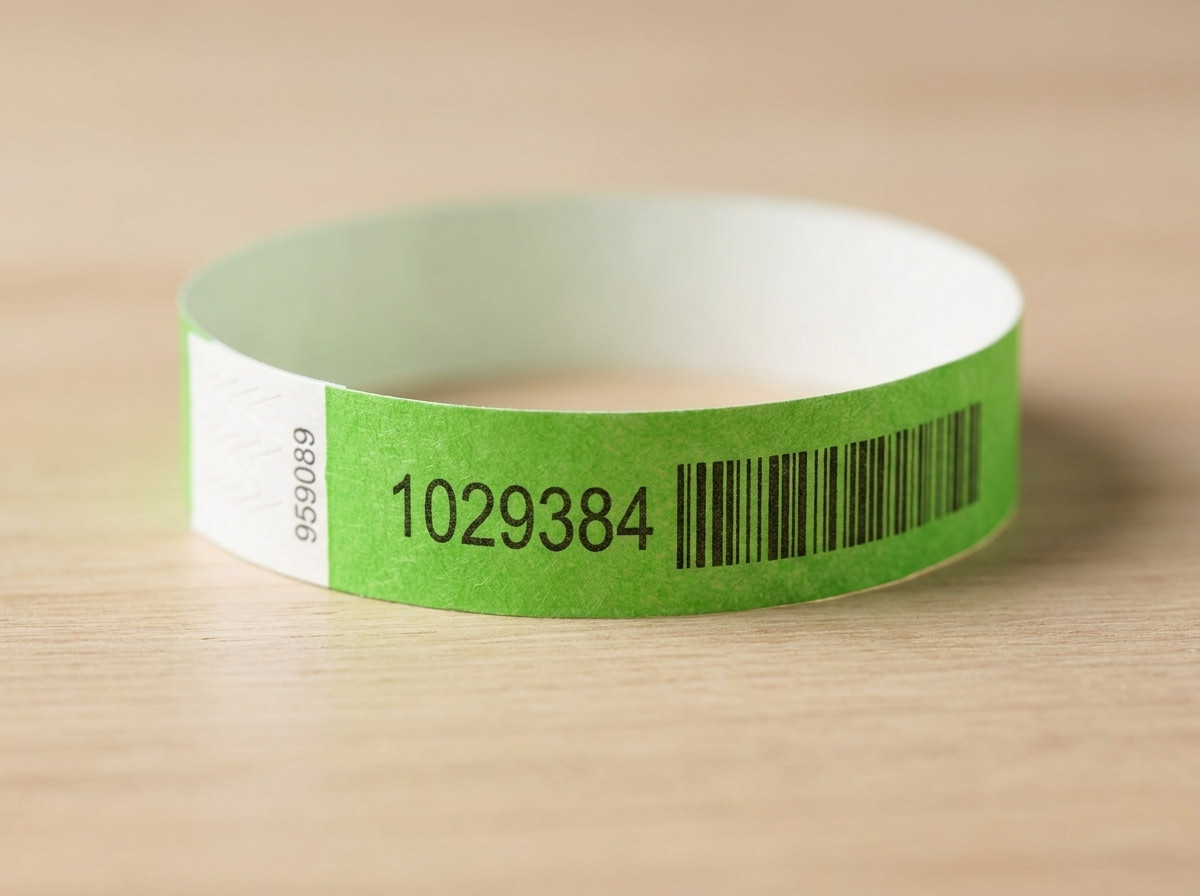
The number is typically rendered as a human-readable string of digits, as a barcode (Code 128, Code 39, EAN, and similar linear formats are common), or as both simultaneously. This dual presentation means a door supervisor can read the number visually when a scanner is unavailable — a practical advantage in low-light venues or busy outdoor festivals where technology sometimes fails at the worst moment.
Crucially, sequential numbering is a print-time technology. It does not require embedding a chip, antenna, or any electronic component into the wristband. The security comes entirely from controlled print production: we generate the number series, print it, and supply it in sequence so the organizer knows exactly which numbers belong to their event.
Why Sequential Numbering Strengthens Event Security
Security at events is a layered challenge. Physical barriers, trained staff, and access control systems all play a role, but wristbands are often the first — and sometimes the only — line of defense between a paid-up attendee and a gatecrash. Sequential numbering adds several distinct security layers:
- Counterfeit detection: Anyone attempting to forge a wristband must guess or replicate a specific number. Because the valid range is known only to the organizer (and us as manufacturer), any band carrying a number outside that range — or no number at all — is immediately identifiable as fake.
- Duplication prevention: Even if a fraudster copies a genuine wristband design, they cannot duplicate a unique number without creating a collision — two people at your gate with identical numbers. Staff can spot this instantly and flag both for secondary inspection.
- Revocation capability: If a wristband is reported lost or stolen, its specific number can be flagged on a gate list, preventing a finder or thief from using it for entry.
- Accountability trails: In environments like hotels, corporate retreats, or multi-zone festivals, numbered wristbands create an audit trail. If an incident occurs, security can review which numbered band was present in a given area at a given time.
- Staff confidence: A numbered wristband gives door staff a clear, unambiguous check to perform. There is no judgment call about whether a colour matches — a number is either on the list or it is not.
For events where access control is mission-critical — capacity-limited venues, age-restricted events, VIP areas with high-value perks, or security-sensitive corporate gatherings — sequential numbering is not a luxury feature. It is a fundamental part of responsible event management.
Sequential Numbering for Tracking and Operational Management
Security is the most obvious application, but sequential numbering delivers substantial operational value well beyond the gate. Event organizers, hospitality managers, and production teams have found creative and practical uses for numbered wristbands across the entire event lifecycle.
Ticket Tier and Zone Management
Large festivals often run multiple access tiers: general admission, standing premium, seated, backstage crew, media, and so on. Rather than printing distinct designs for every tier — which increases design complexity and cost — organizers can assign number ranges to each category. Numbers 00001–02000 might be general admission; 02001–02500 might be VIP. Gate staff see the number range at a glance and know immediately which zone the holder may enter.
Cashless and Consumption Tracking
At events using paper-based voucher systems or manual consumption tracking at bars and food stalls, a wristband number becomes the reference point for the entire transaction log. Bar staff note the wristband number against each order; at the end of the event, consumption data can be aggregated by number. This is particularly useful for all-inclusive packages at corporate events, hotel pool parties, or cruise excursions where a certain spend allowance is included in the ticket price.
Lost and Found and Guest Services
Theme parks, holiday camps, and family events register each wristband number against a guest name and contact details at check-in. When a child gets separated from their family, a member of staff reads the wristband number, cross-checks the registry, and reunites the family within minutes. The same principle applies at corporate events where lanyards can be lost but a wristband stays firmly on the wrist.
Post-Event Analytics
When wristband numbers are scanned at entry checkpoints throughout a venue, the resulting data paints a detailed picture of crowd flow: peak entry times, dwell time in zones, and drop-off points where guests leave early. This intelligence feeds directly into planning for future editions of the same event, helping organizers size bars, toilets, and staff deployment more accurately.
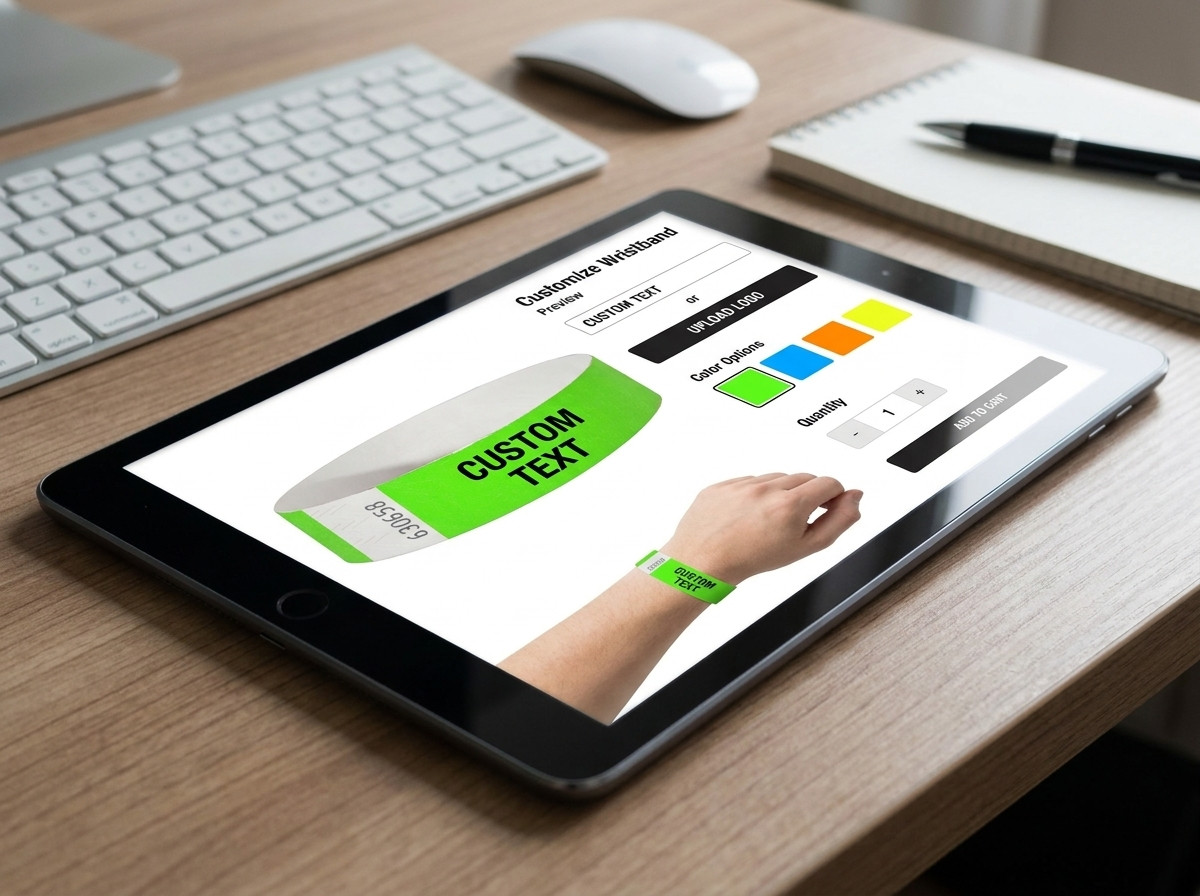
Choosing the Right Wristband Material for Sequential Numbering
Not all wristband materials are equally suited to every numbered application. The choice of substrate affects durability, print quality, tamper resistance, and cost. Here is how the two primary materials we manufacture compare in the context of sequential numbering:
Tyvek Wristbands with Sequential Numbers
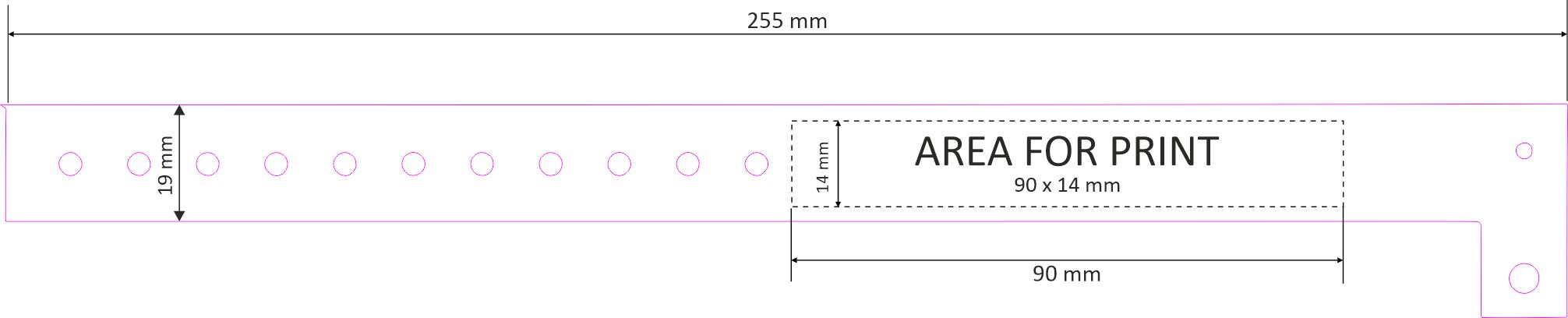
Tyvek is a high-density polyethylene fabric-like material that combines paper-like printability with surprising tear resistance. It is the industry standard for single-use event wristbands precisely because it is lightweight, comfortable, and accepts high-definition print — including fine sequential barcodes — with excellent contrast and readability.
For sequential numbering, Tyvek offers a compelling combination of print sharpness and cost efficiency. Barcodes and digit strings print crisply, even in small point sizes, which is important when the number needs to fit within the narrow width of a standard wristband. The anti-transfer adhesive closure means the band cannot be removed and re-applied to another wrist — a key security property that makes the sequential number meaningful. One major operational advantage: Tyvek wristbands can be printed the same day they are ordered, meaning an organizer who realises on a Monday morning that their event is on Tuesday evening is not necessarily lost. Fast production combined with DHL Express and FedEx Express delivery has rescued more than a few last-minute events from logistical disaster.
Vinyl (PVC) Wristbands with Sequential Numbers
Vinyl wristbands are the premium multi-day option. Thicker, more rigid, and waterproof, they are designed to stay on a wrist for three days at a music festival or a week-long holiday camp without showing significant wear. Sequential numbers printed on vinyl benefit from the material's durability — a number that needs to be scanned on Day 4 of a five-day event must still be legible despite sunscreen, rain, and chlorine from a festival shower block.
Vinyl wristbands also offer a wider print area and richer colour depth than Tyvek, which means sequential numbers and barcodes can be integrated into more complex artwork without compromising readability. The snap-lock or plastic clasp closure on vinyl wristbands is designed to be tamper-evident: once locked, the band cannot be transferred. This physical security reinforces the logical security of the unique sequential number.
Comparative Summary
- Tyvek: Best for single-day or short events; same-day printing available; cost-effective for large volumes; excellent barcode print quality; anti-transfer closure.
- Vinyl/PVC: Best for multi-day events or harsh environments; waterproof and durable; premium appearance; wider design canvas; tamper-evident clasp.
How We Produce Sequentially Numbered Wristbands
Understanding the production process helps event organizers specify their order correctly and set realistic expectations for lead times and quality.
Artwork and Design
Every sequentially numbered wristband starts with a design. Our free graphic design service means you do not need to supply print-ready artwork — simply tell us what your event is called, what colours and branding you want, which number range you need, and whether you want the sequence presented as digits only, as a barcode, or as both. Our design team creates professional artwork at no extra charge, and you approve it before a single wristband is printed. This removes a major barrier for smaller events and community organizations that lack in-house design resources.
Variable Data Printing
Sequential numbering is produced using variable data printing (VDP): a process in which each unit in a print run receives a uniquely generated number, incremented automatically. Unlike static print jobs where every sheet is identical, VDP requires careful pre-press workflow management to ensure numbers print in the correct order, with no duplicates and no gaps. Our production systems handle this automatically, generating the number sequence, embedding it into the print file, and verifying output — so you receive bands that are in perfect numerical order, ready to distribute.
Quality Control
Each roll of sequentially numbered wristbands undergoes visual and automated inspection to confirm that numbers are legible, correctly sequenced, and properly positioned within the design. Barcode print quality is tested for scan reliability at standard reader distances. Any band that fails these checks is removed from the production run and the sequence is reprinted to maintain continuity. You will never receive a roll with missing or duplicate numbers.
Express Production and Delivery
Last-minute orders are a reality of event management, not an exception. Production schedules are disrupted by late venue confirmations, ticket sales that outperform forecasts, or suppliers who fail to deliver. Our express production capability — with same-day printing for Tyvek orders — combined with DHL Express and FedEx Express shipping means that even urgent orders can reach their destination in time. We have a track record of producing and dispatching numbered wristband orders for events that were days — sometimes hours — away from their start time.
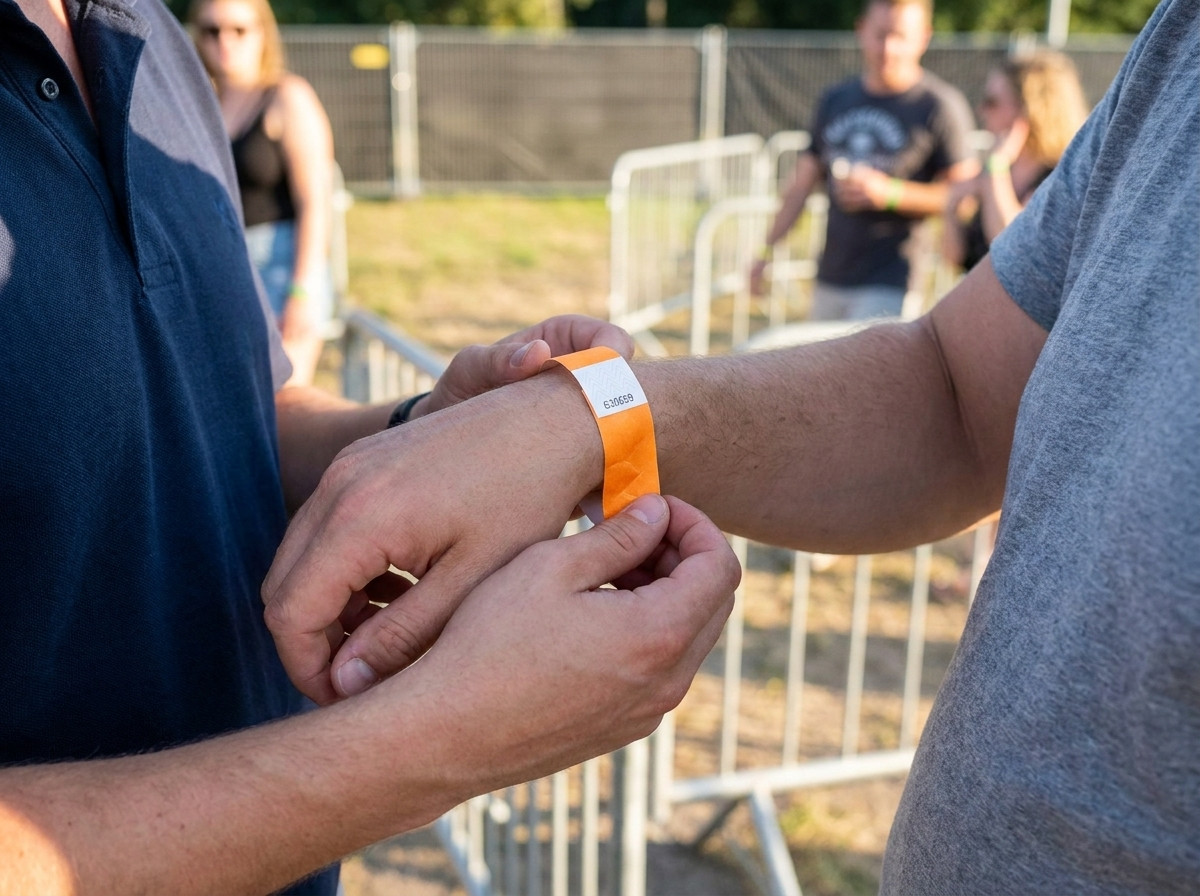
Practical Recommendations for Implementing Sequential Numbering
Having sequential numbers on your wristbands is only as effective as the system you put around them. Here are practical recommendations for making the most of numbered wristbands at your event:
Define Your Number Range Before Ordering
Decide on a starting number, an ending number, and whether you want any prefix or suffix (e.g., a year code like «2025-» before the digits, or a zone letter like «VIP-»). Communicate this clearly when placing your order so the variable data file is generated correctly from the start. Avoid starting at zero if you intend to use leading zeros — specify the total digit count (e.g., six digits: 000001 to 005000) so that all numbers are the same length, which simplifies visual checks.
Create and Secure Your Master List
Before the event, export or record the complete range of valid numbers and store it securely. This is your master check list. Distribute it only to staff who need it, and ensure it is accessible offline as well as online — gate Wi-Fi at festivals is notoriously unreliable, and your access control process should not depend on a stable internet connection.
Train Your Staff
Brief all gate and zone staff on the number range for each access tier. Simple laminated reference cards — «General Admission: 00001–02000; VIP: 02001–02300» — make checks fast and consistent. Staff who understand the logic behind sequential numbers are also better equipped to detect anomalies and raise alerts rather than waving through a suspicious band.
Plan for Replacements
Order a small buffer stock of replacement wristbands for genuine re-issue scenarios: a guest breaks a band accidentally, a band is spoiled at check-in, or a legitimate transfer is required. Keep replacement bands in a separate range (e.g., a «replacement» prefix or a distinct high number block) so your master list remains clean and replacements are identifiable as such.
Integrate with Scanning Where Possible
If your event has the budget and infrastructure for barcode scanning at entry points, sequential numbering becomes even more powerful. Each scan can be logged with a timestamp, creating a real-time record of who entered, when, and through which gate. Even a smartphone running a free barcode scanner app pointed at a numbered Tyvek wristband delivers meaningful data — no specialist hardware required.
Dispose of Used Wristbands Responsibly
After the event, collect and securely dispose of or shred used wristbands — particularly for high-security events where you would not want a spent band to be presented fraudulently at a future event. For the vast majority of single-day events this is a minor consideration, but for recurring events at the same venue with the same brand, it is worth including in your post-event operational checklist.