


What Is a Barcode Wristband? Definition and Core Technology
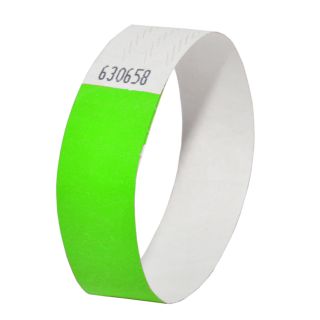
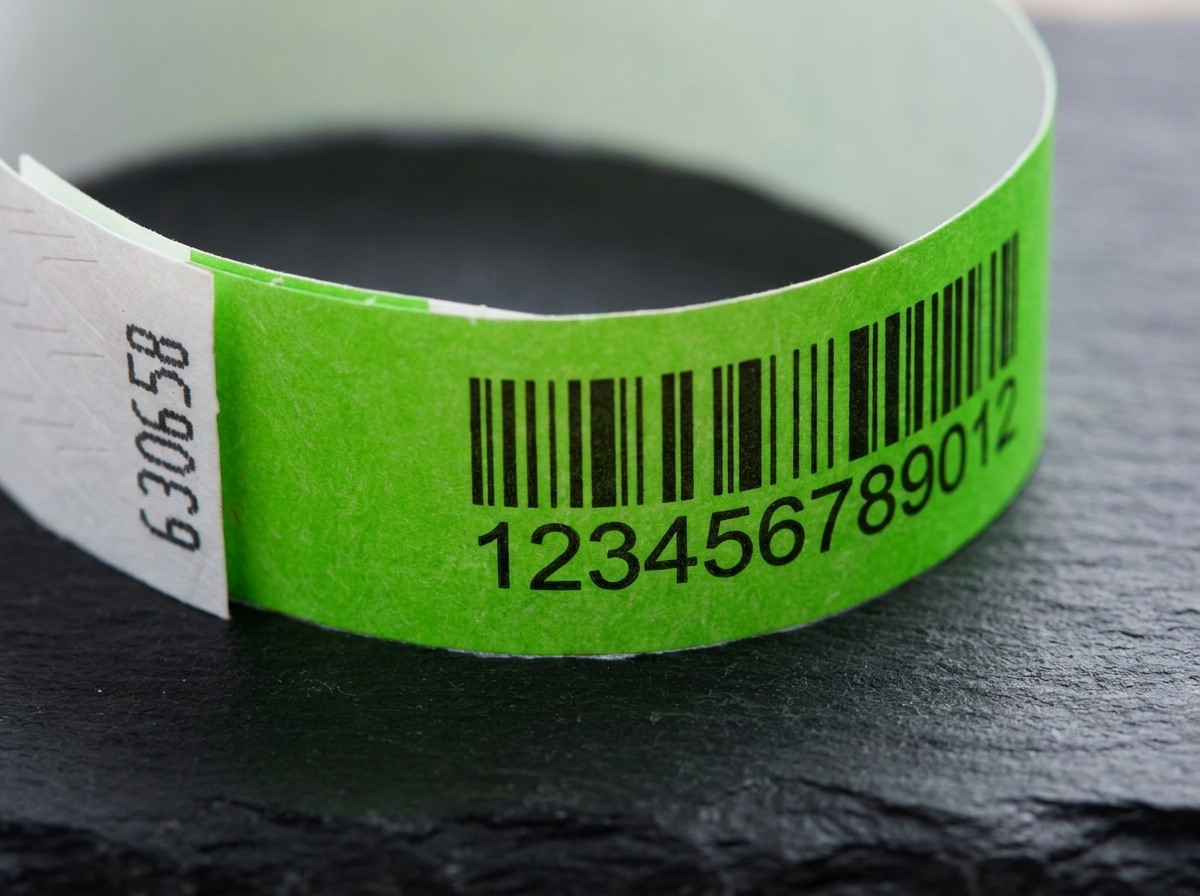
A barcode wristband is a wearable band — made from Tyvek, vinyl/PVC, or rigid plastic — that carries a machine-readable barcode printed directly onto its surface. The barcode encodes a string of characters (a ticket ID, a guest number, a reservation code) that a scanner translates back into data and cross-references with your event management system.
There are two main barcode families used on wristbands:
- 1D linear barcodes (Code 128, EAN-13, Code 39): a series of parallel lines of varying widths. Fast to scan with a basic laser or CCD reader, they typically hold 10–25 alphanumeric characters — more than enough for a unique attendee ID.
- 2D barcodes / QR codes: a matrix of dots readable by any smartphone camera or 2D imager. They store significantly more data and can still be read even if up to 30 % of the symbol is damaged, making them robust for outdoor events where wristbands endure sweat and rain.
The barcode is usually paired with a sequential number printed in human-readable form beneath it. If a scanner fails, staff can type the number manually — a simple but important backup that keeps entry moving. Sequential numbering also makes stock control straightforward: you know exactly which bands have been issued and can void any reported stolen.
How Barcode Wristbands Enable Access Control
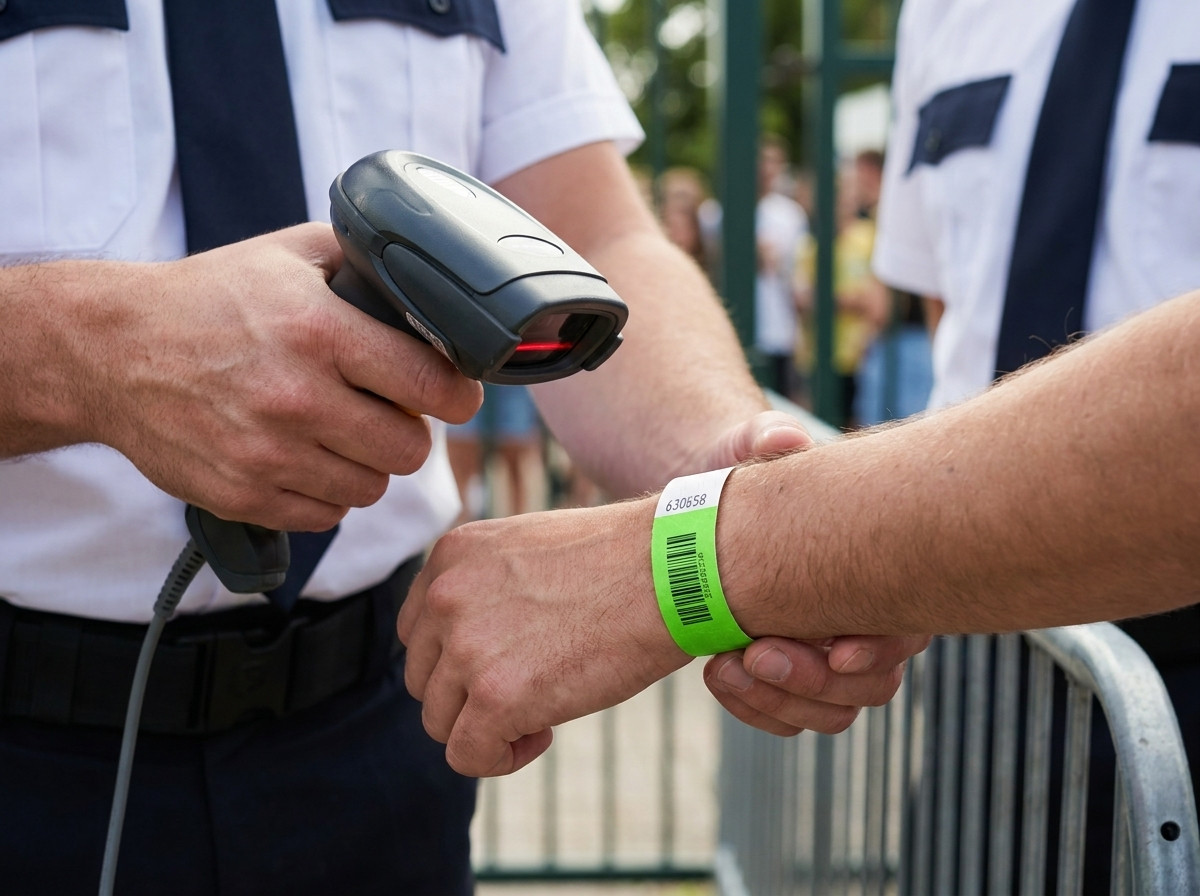
Access control with barcode wristbands is a straightforward three-step loop: scan, validate, act. When a guest presents their wristband at a gate, a handheld or fixed scanner reads the barcode in milliseconds, sends the encoded ID to your ticketing or access platform, and receives a green or red signal back. The whole exchange typically completes in under half a second — fast enough to process hundreds of guests per gate per hour.
More sophisticated deployments add layers of logic to that loop:
- Zone-based access: different barcode values map to different privilege levels. A general-admission barcode opens the main floor but not the backstage zone; a VIP barcode opens both. The same hardware handles both; the rules live in software.
- Re-entry control: the system flags a barcode as «used» after first scan. Attempted re-use at any gate triggers an alert. This eliminates ticket sharing and wristband lending.
- Time-window restrictions: barcodes can be programmed to activate only during specific hours — useful for conference sessions, shuttle services, or meal passes included with a ticket.
- Capacity management: real-time counting by gate lets safety officers monitor crowd density and close zones before they exceed legal limits.
The scanners themselves range from inexpensive Bluetooth-connected pistol grips to tablet-mounted 2D imagers built into turnstiles. Most modern event ticketing platforms (including open-source options) offer a free companion scanning app that turns any recent smartphone into a gate reader — an important consideration for community events with tight budgets.
Attendee Tracking: Analytics Beyond the Gate
Every scan is a timestamped data point, and a multi-gate event generates thousands of them. Aggregated, those points tell a story that goes far beyond simple headcounts.
Entry and exit flow mapping reveals which gates are bottlenecks and which are underused. Organizers can redirect staff in real time or redesign gate layouts for the next edition. Dwell-time analysis — calculated from entry and exit scans — shows how long attendees stay, which correlates strongly with spending and satisfaction. Session attendance at conferences or multi-stage festivals can be measured scan by scan, giving sponsors verified audience numbers rather than estimates.
Barcode data also integrates naturally with cashless payment loops. When a wristband barcode is linked to a pre-loaded credit balance in your system, the same scan that grants entry can later authorize food, merchandise, or bar purchases — all tracked under one guest profile. You get granular spending data; guests get a frictionless experience without fumbling for cards or cash.
For recurring events — annual festivals, membership clubs, season-ticket holders — historic scan data builds profiles that inform loyalty programs, targeted communications, and personalized offers for the next edition.
Tyvek vs. Vinyl: Choosing the Right Material for Your Barcode Wristband
The barcode is only as reliable as the surface it is printed on. Material choice directly affects scan accuracy, wristband longevity, and overall guest experience.
Tyvek Barcode Wristbands
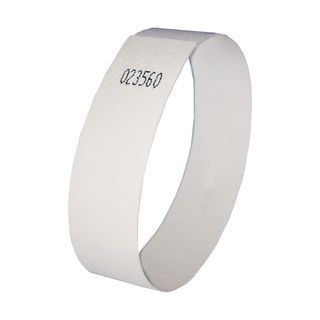
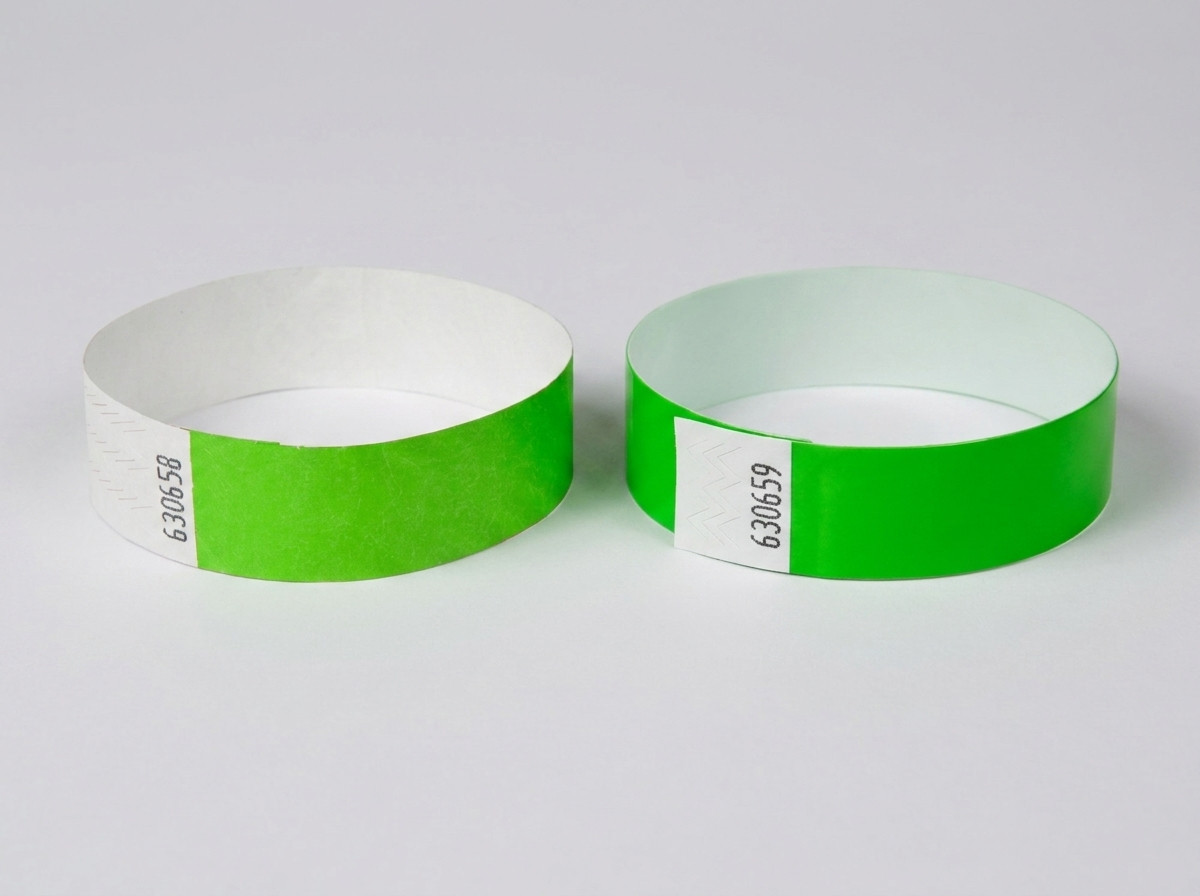
Tyvek is a spunbonded polyethylene sheet that looks and feels like paper but resists tearing, moisture, and abrasion far better. Its smooth, bright-white surface produces exceptionally sharp barcode edges — the contrast and edge definition that scanners depend on. Tyvek wristbands are single-use by design: the self-adhesive closure cannot be opened and re-fastened without visible damage, which is precisely the tamper-evidence feature that makes them valuable for access control.
Key advantages for barcode applications:
- High-resolution print quality means barcodes scan cleanly even at small symbol sizes.
- Light and comfortable for short-duration wear (single-day festivals, concerts, day-pass conferences).
- Cost-effective when ordering in bulk — ideal for events with thousands of attendees.
- Same-day production is available: order in the morning and your wristbands can be printed and ready for dispatch the same day, with no rush surcharge applied.
Tyvek is less suited to events spanning multiple days where guests shower, swim, or sleep in their wristbands. Extended wear and prolonged moisture exposure can cause the barcode area to wrinkle and affect scan reliability.
Vinyl (PVC) Barcode Wristbands
Vinyl wristbands are made from flexible PVC with a smooth laminate face that accepts high-definition print and protects it against water, sunscreen, and repeated handling. The anti-transfer snap closure is both secure and adjustable, making vinyl the material of choice for multi-day events where wristbands must survive 72 hours or more of continuous wear.
Key advantages for barcode applications:
- Water-resistant surface keeps barcode contrast intact through rain, swimming pools, and perspiration.
- Durable enough for three-to-five-day festivals, hotel resort pools, hospital patient ID, and cruise-ship guest management.
- The smooth face allows a QR code to be printed large enough to be scanned easily by staff using smartphone apps — no dedicated hardware required.
- Vibrant colour options make zone differentiation (VIP red, general blue, crew yellow) immediately visible to gate staff, adding a visual layer to the digital access control.
Vinyl wristbands have a slightly higher unit cost than Tyvek, but for multi-day events that cost is negligible compared with the operational savings from reliable scanning and zero wristband replacements.
Print Quality, Design, and Getting Your Barcodes Right
A barcode that fails to scan at a busy gate is more than a nuisance — it creates queues, frustrates guests, and puts pressure on staff who must resort to manual overrides. Getting the print right from the start is therefore a technical priority, not just an aesthetic one.
Minimum quiet zone: every barcode standard requires a clear white margin — the «quiet zone» — around all four sides of the symbol. On a wristband, designers sometimes push artwork too close to the barcode, eliminating the quiet zone and causing scan failures. The rule of thumb is at least ten times the width of the narrowest bar (the X-dimension) on each side of a 1D code, and four modules on each side of a QR code.
Contrast: black on white is the gold standard. Dark ink on a light background consistently outperforms any other colour combination, especially under the mixed lighting conditions (bright sunlight, dim venue lighting) typical of events. If your branding requires a coloured wristband, keep the barcode panel white.
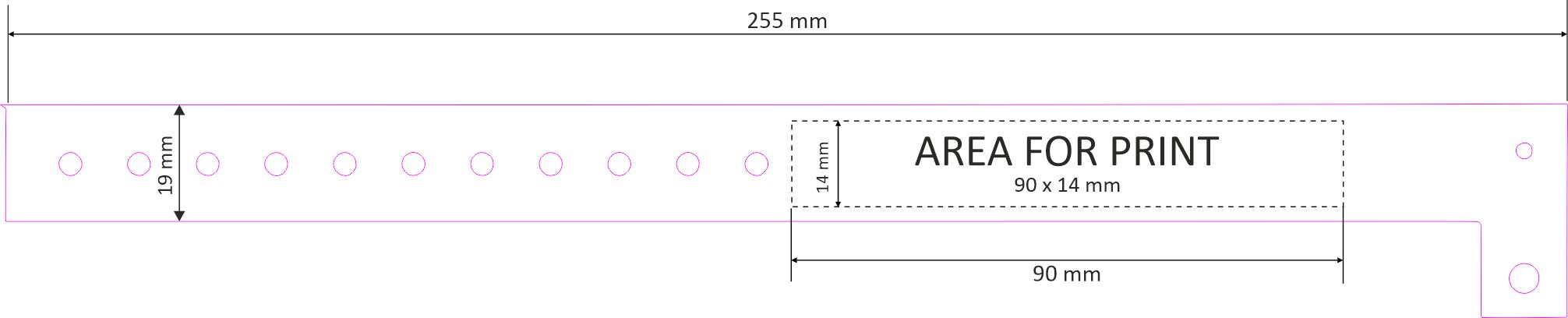
Symbol size: on a standard 25 mm Tyvek wristband, a Code 128 barcode with 10–12 characters can be printed at a height of 10–12 mm and remain reliably scannable. QR codes intended for smartphone scanning should be at least 20 × 20 mm. Going smaller saves space but introduces margin for error in production and scanning.
Sequential numbering: each wristband should carry a unique barcode value. Variable-data printing allows every wristband in a batch to carry a different encoded ID, linked to a specific ticket or reservation in your system. This is standard practice and something to confirm with your supplier before ordering.
Free graphic design removes one of the biggest obstacles for event organizers who are not familiar with barcode specifications. When you brief the design team on your event details, colour preferences, and access zones, they build the artwork — barcode included — to the exact technical specifications required for clean scanning. You review and approve; production begins immediately.
Real-World Use Cases for Barcode Wristbands
Barcode wristbands are versatile enough to serve radically different industries. Here are the most common deployments and the specific operational challenges they solve:
- Music festivals and concerts: large crowds and multiple entry gates demand sub-second scan times and robust fraud prevention. Barcode wristbands with sequential numbering and re-entry logic prevent ticket sharing and allow organizers to track real-time attendance across zones. Tyvek is the dominant choice for single-day events; vinyl covers multi-day festivals.
- Conferences and trade shows: session-level access control, speaker backstage zones, and exhibitor-only areas all require differentiated access. A single guest database can assign different barcode privilege levels to delegate, speaker, press, and sponsor passes — all printed on the same wristband format for operational consistency.
- Hotels and resorts: pool and spa access, all-inclusive meal validation, and guest identification across a large property are all manageable with barcode vinyl wristbands. Guests wear them for the duration of their stay; staff scan them at every service point. The data feeds directly into the property management system.
- Sports events: stadiums use barcodes to map spectators to specific seats, enforce age-restriction zones (such as areas serving alcohol), and manage VIP hospitality suites — all from a central dashboard visible to security coordinators.
- Healthcare: patient ID wristbands with barcodes linking to electronic health records reduce medication errors and speed up triage. Vinyl wristbands are preferred for their durability and comfort over multi-day stays.
- Amusement parks and water parks: ride access, locker management, and cashless F&B payments all run through a single barcode scan. Vinyl wristbands handle the inevitable water and sunscreen exposure without degrading print quality.
Last-Minute Orders and Express Production
Even the most organized event teams occasionally face a crisis: an oversight in the planning timeline, a supplier who goes silent two days before the event, or a sudden increase in expected attendance that requires an additional batch of wristbands. These situations are more common than most organizers admit publicly.
Express production with same-day printing for Tyvek orders means that a wristband crisis does not have to become an event crisis. An order placed in the morning can be printed, finished, and handed to a courier the same day — with no rush surcharge added to the invoice. Delivery via DHL Express or FedEx Express then brings the wristbands to their destination in the fastest timeframe the network allows, whether that is the next morning domestically or within 48 hours across international borders.
This kind of operational reliability is built on in-house manufacturing. Because Tyvek and vinyl wristbands are produced on-site rather than outsourced to a third-party print facility, there is no intermediate step that can introduce delays, miscommunications, or quality-control gaps. The same team that designs the artwork runs the presses and hands the finished goods to the courier — a short, controlled chain that makes fast turnaround genuinely achievable rather than merely promised.