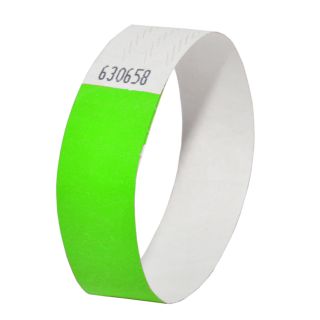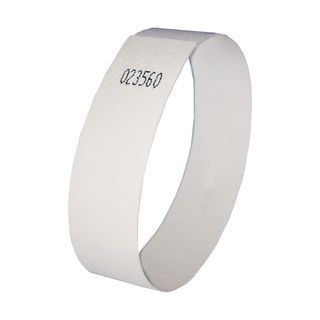



What Are Tyvek Wristbands? Material Properties Explained
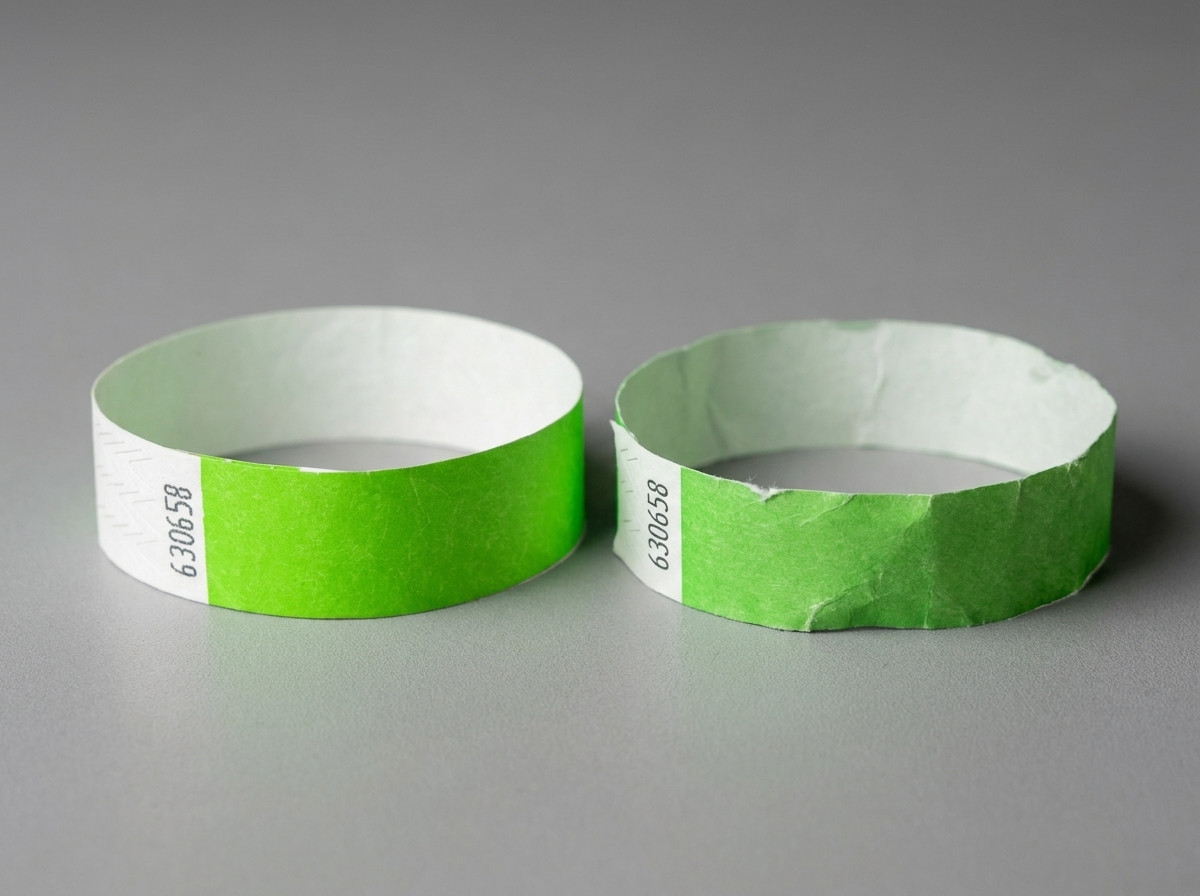
Tyvek is a proprietary nonwoven material composed of flash-spun high-density polyethylene (HDPE) fibres. The result is a sheet that combines the printability of paper with the structural resilience of a synthetic film. When used for wristbands, Tyvek is typically produced in rolls that pass through high-resolution digital printers, allowing for sharp text, vivid colours, barcodes, QR codes, and sequential numbering in a single production run.
The key physical properties that make Tyvek exceptional for wristbands are:
- Tear resistance: Tyvek fibres interlock in a random pattern, making it extremely difficult to tear by hand — a crucial anti-transfer feature.
- Moisture resistance: The polyethylene composition repels water, so the wristband stays intact during rain, sweat, or accidental splashing.
- Lightweight comfort: Despite its toughness, Tyvek weighs almost nothing and does not irritate the skin during extended wear.
- Tamper-evident closure: Tyvek wristbands use a specially formulated adhesive that bonds permanently on first contact and cannot be removed and re-applied — meaning any attempt to transfer the wristband to another person destroys it visually.
These properties make Tyvek the default choice for multi-day festivals, outdoor concerts, amusement parks, water parks, hospital patient identification, and any event where wristbands must survive more than a few hours of active wear.
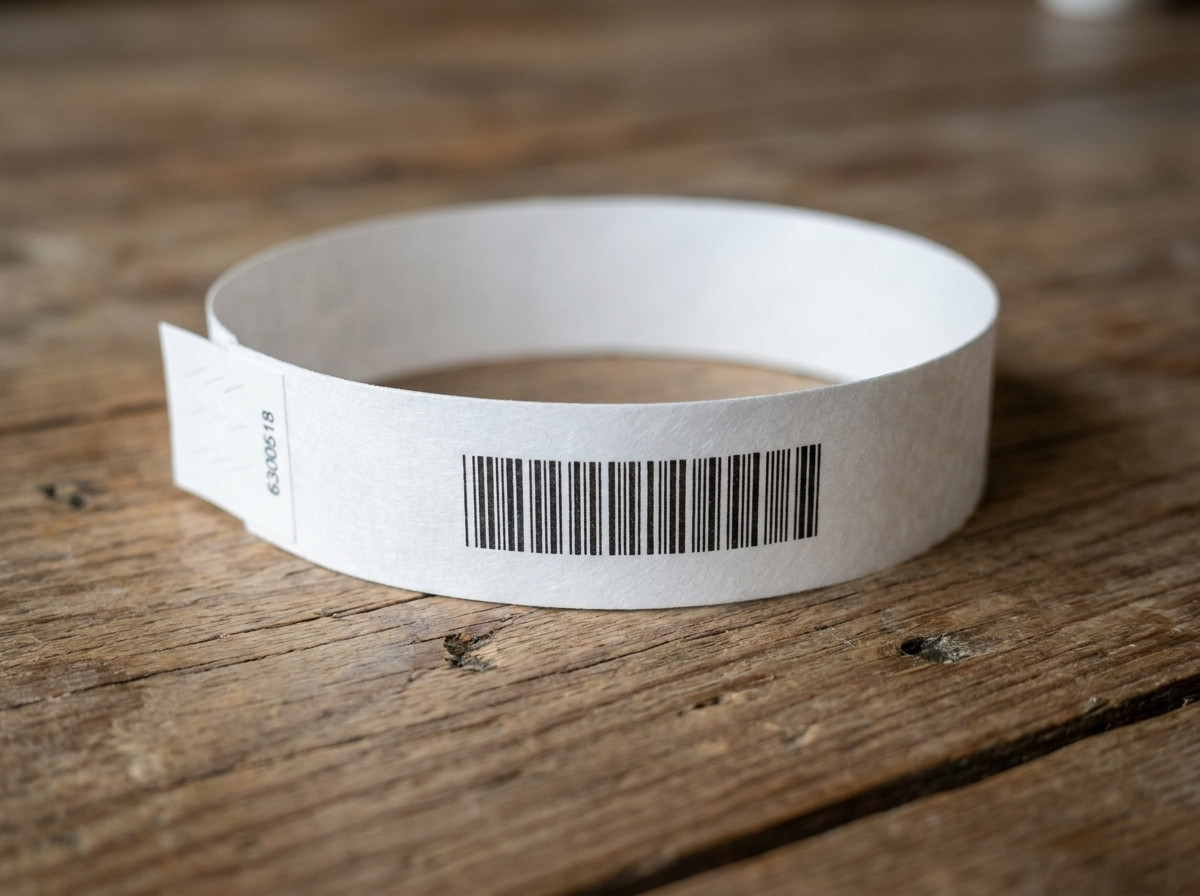
What Are Paper Wristbands? Properties and Limitations
Paper wristbands are manufactured from coated or uncoated card stock, similar to the material used for ticket stubs or name badges. They are typically narrower and thinner than Tyvek wristbands and are closed with a simple pressure-sensitive adhesive tab. In the right context — a short indoor event, a one-night admission, a controlled environment — paper wristbands do exactly what is needed at a minimal cost.
However, their material limitations become obvious quickly:
- Low moisture tolerance: Paper fibres absorb water. A paper wristband that gets wet — from rain, a spilled drink, or even heavy perspiration — quickly softens, tears, and loses its closure integrity.
- Limited tear resistance: Unlike Tyvek, paper can be cut or torn relatively easily, which reduces its effectiveness as a security barrier for high-value access.
- Shorter lifespan: For single-day, indoor events paper is entirely adequate. For anything longer than eight to twelve hours in active conditions, degradation becomes a real problem.
- Print durability: Ink on paper is more susceptible to smearing when wet, potentially making QR codes and barcodes unreadable at entry points.
None of these limitations make paper wristbands bad — they make them context-specific. A dry, climate-controlled conference lasting four hours is a perfect use case. A weekend camping festival is not.
Tyvek vs Paper: Head-to-Head Wristband Comparison
Let's compare the two materials across the dimensions that matter most to event organizers.
Durability and Weather Resistance
Tyvek wins decisively here. Its polyethylene structure repels water, resists tearing, and holds its shape for multiple days. It has been documented to remain fully intact on a wearer's wrist after swimming, showering, and outdoor exposure to rain. Paper, by contrast, begins to soften within minutes of sustained moisture contact. For any outdoor event or any event exceeding one day, Tyvek is the only practical choice.
Print Quality and Customisation
Both materials can be printed with the same range of custom content: your event logo, sponsor artwork, colour gradients, sequential numbering, barcodes, and QR codes. High-definition digital printing on Tyvek produces sharp, vivid results because the surface is smooth and consistent. Paper also accepts HD print well under dry conditions, though the finish can feel slightly more matte depending on the stock used. In both cases, free professional artwork creation means your design is handled by specialists — you simply describe what you need, and production-ready files are created at no extra charge.
Security and Anti-Transfer Performance
This is where Tyvek creates a significant gap. The adhesive tab on a Tyvek wristband is engineered to bond permanently on first closure. Any attempt to peel it away leaves a visible void pattern on the band itself, instantly signalling tampering to your staff. Because the material also resists tearing, cutting and re-tying is not a realistic option without destroying the band entirely. Paper wristband closures, while adhesive, are generally easier to compromise — particularly when moisture has weakened the paper fibres. For high-security access control (VIP areas, age-restricted zones, cashless spending wristbands), Tyvek is the clear choice.
Comfort and Wearability
Both materials are comfortable for short periods. Over extended wear — multiple days at a festival, an overnight hospital stay — Tyvek holds a slight edge because it does not soften or degrade against the skin the way damp paper does. Tyvek's softness is intentional; the fibres create a textile-like hand feel rather than a rigid or scratchy sensation.
Cost Efficiency
Paper wristbands have a marginally lower unit cost. However, cost-per-wristband is rarely the right metric. The true cost calculation must include: How many guests will need wristband replacements because their band degraded? What is the cost of a security breach from a transferred wristband? For short indoor events with controlled conditions, paper represents excellent value. For everything else, the slightly higher investment in Tyvek prevents far more expensive problems.
Real-World Use Cases: When to Choose Each Material
Choose Tyvek Wristbands When…
- Your event lasts more than one day. Multi-day festivals, conventions, and sporting events demand a band that survives 24–72+ hours of continuous wear.
- Outdoor exposure is likely. Rain, humidity, swimming pools, or water features will destroy a paper wristband. Tyvek is water-resistant by design.
- Security is a priority. VIP access, age verification for alcohol or rides, and cashless areas all require a band that cannot be transferred or faked.
- You need same-day production. Tyvek wristbands can be printed and dispatched the same day an order is placed — an essential capability when a last-minute crisis strikes. Event organizers who discover at 9 p.m. the night before that their supplier has failed them have successfully received production-ready Tyvek wristbands in time for doors opening, thanks to express production with no rush surcharge and fast delivery via DHL Express and FedEx Express.
- Barcodes or QR codes must scan reliably. The moisture-resistant surface keeps print crisp throughout the event.
Choose Paper Wristbands When…
- The event is short and indoors. A corporate seminar, a private dinner party, a one-evening theatre performance — paper is entirely adequate.
- Budget is the overriding constraint. For very large single-day indoor events where security is secondary, the cost saving can be meaningful at scale.
- Differentiation by colour is the primary goal. Paper wristbands in multiple colours are a quick way to distinguish ticket tiers or age groups for a few hours.
The Last-Minute Scenario
One of the most stressful moments in event management is discovering — sometimes 24 hours before doors open — that wristbands have not been ordered, or that a supplier has failed to deliver. In this scenario, Tyvek's same-day production capability is not just a convenience; it is a lifeline. Because manufacturing is done in-house (not outsourced to a third party), production can begin the moment artwork is approved. Combined with express courier services, this means even genuinely last-minute orders can arrive in time. Paper wristbands, while sometimes available from local print shops, rarely offer the same combination of quality, security, and custom branding on such short timelines.
Production, Artwork, and Ordering: Practical Considerations
Artwork and Design
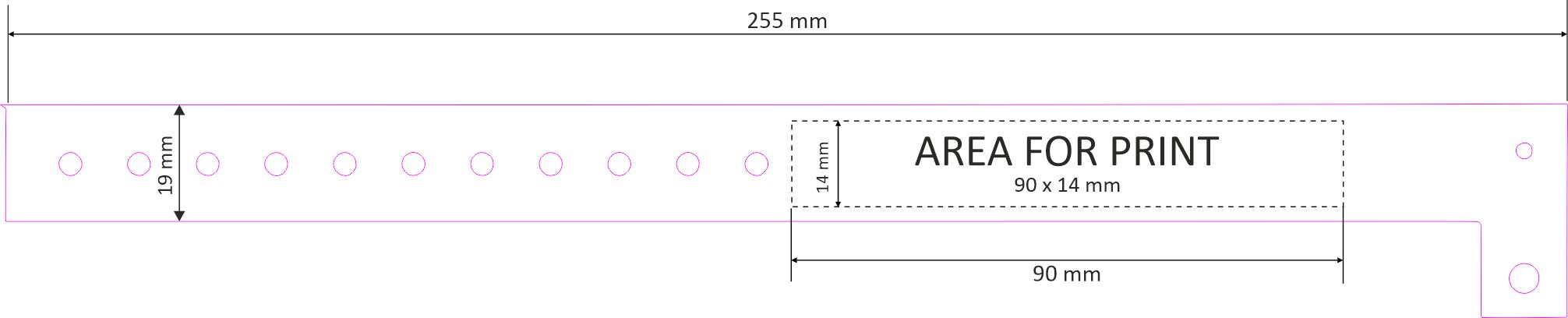
A wristband is a small canvas — typically 25 mm wide and around 250 mm long — which means design decisions matter more, not less. Logos need to be optimised for narrow-format printing. Colour values need to translate correctly to a physical substrate. Sequential numbering must be laid out so it prints cleanly at the correct font size. All of this is handled at no extra cost as part of the ordering process: professional graphic designers create production-ready artwork based on your brief. You do not need to supply print-ready files, although you can if you have them.
Minimum Orders and Quantities
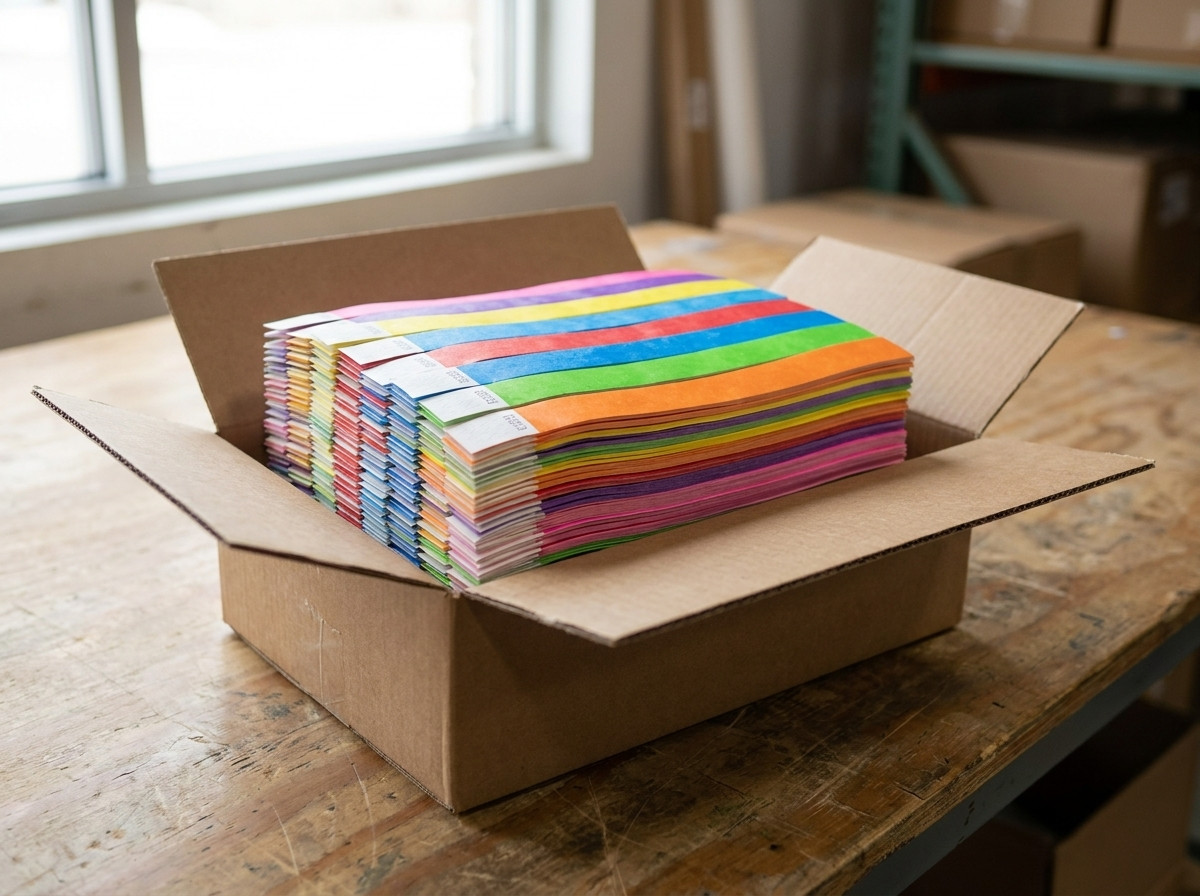
Tyvek wristbands are typically produced in runs that start at quantities suitable for small events and scale up to tens of thousands for major festivals. Because production is handled in-house on dedicated wristband printing equipment, turnaround times are consistent regardless of quantity. Both paper and Tyvek share similar minimum order thresholds — the key differentiator is speed and material performance, not access to production.
Encoding and Variable Data
Both Tyvek and paper wristbands support variable data printing: sequential numbering (001, 002, 003…), unique barcodes, and QR codes. Each wristband in a run can carry a unique identifier, which integrates directly with event management software and access control scanners. QR codes printed on Tyvek maintain their scannability throughout the event because the surface does not degrade; paper QR codes may become unreadable if moisture causes ink smearing.
Environmental Considerations
Both materials have an environmental footprint. Tyvek, being a plastic-derived material, is not biodegradable in standard conditions — however, it is recyclable through specialist streams. Paper wristbands are technically more biodegradable, though the adhesive closure components complicate home composting. For events with strong sustainability commitments, the environmental trade-off should be weighed against the operational benefits of each material. Choosing a material that lasts the full event duration and does not need mid-event replacement also reduces total material consumption.
Recommendations and Final Verdict
The Tyvek vs paper wristband decision is not complicated once you map your event's requirements honestly against each material's properties.
For outdoor events, multi-day events, events with swimming or significant moisture exposure, and any event where security matters: choose Tyvek. Its tear resistance, water resistance, anti-transfer closure, and same-day production availability make it the professional standard for a reason.
For short, dry, indoor events where cost is the primary driver and security is minimal: paper wristbands are a legitimate and practical option.
If you are unsure, Tyvek is the safer default. The marginal cost difference is small, the security and durability advantages are large, and the production timelines — including same-day dispatch for urgent orders at no rush surcharge — remove the traditional argument that Tyvek requires more lead time. With free professional artwork creation and express delivery through DHL Express and FedEx Express, there is very little reason to compromise on material quality even when time is tight.